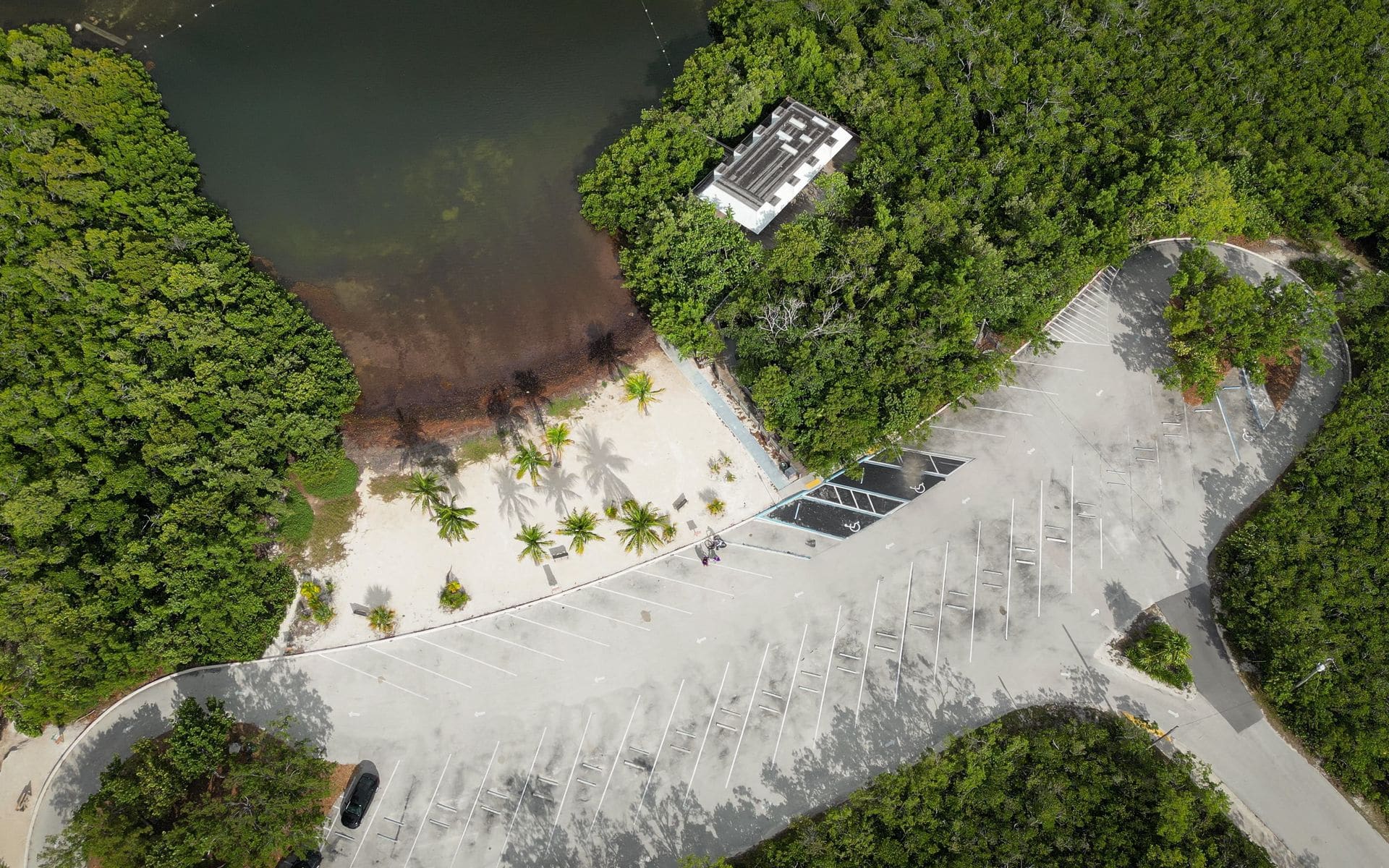
1. Everglades National Park
Best for: wildlife and airboats | Region: South Florida | Fee: $35 per vehicle, 7 days | Season: Nov-April dry season | Note: three separate entrances
Everglades National Park is the largest tropical wilderness in the country and the only place where alligators and crocodiles live side by side. It has three entrances that do not connect inside the park: Homestead for the main road to Flamingo, Shark Valley on the Tamiami Trail for the tram loop and tower, and Everglades City for the Ten Thousand Islands.
Go in the dry season, roughly November through April, when wildlife concentrates and the mosquitoes are bearable. Summer is hot, wet, and buggy. It anchors the wild interior of South Florida, about an hour from Miami.
2. Dry Tortugas National Park
Best for: snorkeling and a sea fort | Region: Florida Keys | Fee: $15 per person | Access: Yankee Freedom ferry from Key West | Ferry: about $220 adults, book weeks ahead
Dry Tortugas is seven remote islands about 70 miles west of Key West, reached only by the Yankee Freedom ferry, a seaplane, or private boat. The huge 19th-century Fort Jefferson sits on Garden Key, with some of the clearest snorkeling water in Florida right off the beach.
The ferry sells out weeks ahead in peak season, so book early. Day trips run about 4.5 hours on the island. This is the wildest corner of the Florida Keys.
3. Biscayne National Park
Best for: reef snorkeling and boating | Region: South Florida | Fee: free entry | Access: by boat only | Note: winter cold fronts cancel trips
Biscayne National Park is 95 percent water, just south of Miami off Homestead, protecting living coral reefs, mangrove shoreline, and shipwrecks on the Maritime Heritage Trail. You reach almost all of it by boat, with snorkel and dive trips running from the Dante Fascell Visitor Center.
The water is clearest in summer, and winter cold fronts can cancel boats, so build in a flex day. It pairs easily with the Everglades on a South Florida nature loop.
4. Big Cypress National Preserve
Best for: swamp scenery and wildlife drives | Region: South Florida | Fee: free | Draw: Loop Road, Kirby Storter boardwalk
Big Cypress borders the Everglades along the Tamiami Trail and protects the cypress swamp that feeds it. The scenic Loop Road and roadside boardwalks put you close to alligators, wading birds, and, if you are very lucky, a Florida panther, without a boat.
It is free and often overlooked next to the Everglades, which makes it a quieter wildlife stop between Miami and Naples. The Oasis Visitor Center boardwalk almost always has alligators lined up in the canal below. Combine it with an airboat tour on the north edge along the Tamiami Trail.
5. Gulf Islands National Seashore
Best for: undeveloped white-sand beaches | Region: Panhandle | Fee: $25 per vehicle, 7 days | Draw: Fort Pickens, Santa Rosa sand
On the far western Panhandle around Pensacola Beach, Gulf Islands National Seashore keeps long stretches of bright white quartz sand free of development, with Fort Pickens guarding the pass. It is the best way to find uncrowded Panhandle beach.
This is the coastal jewel of the Panhandle, roughly a two-day drive from Miami, so treat it as its own trip. Drive out to Fort Pickens for history and quiet sand.
7. Castillo de San Marcos National Monument
Best for: history in a beach town | Region: North Florida | Fee: $15 per adult, valid 7 days | Draw: 1600s stone fort in St. Augustine
The Castillo de San Marcos is the oldest masonry fort in the country, guarding St. Augustine's harbor since the 1600s. Built of local coquina stone, it anchors a walkable historic town in North Florida, about two hours from Orlando.
It is an easy half-day that pairs the beach with 450 years of history. These federal lands protect the wildest ground in Florida. Stay in the walkable core; see the hotels and resorts directory. For state-run wild lands, compare the best state parks in Florida.
8. Timucuan Ecological and Historic Preserve, Jacksonville
Best for: marsh paddling and early history | Region: North Florida | Fee: free | Draw: Fort Caroline, Kingsley Plantation, salt marsh
Timucuan protects 46,000 acres of salt marsh, coastal dunes, and hardwood hammock at the mouth of the St. Johns River in Jacksonville, along with the Fort Caroline memorial and the well-preserved Kingsley Plantation. It is free and quiet, good for kayaking the marsh creeks or walking the shell-mound trails.
It sits about 25 minutes northeast of downtown Jacksonville in North Florida, an easy add on the way to Amelia Island. Come in the cooler months, roughly October through April, to skip the summer heat and biting insects.
9. Fort Matanzas National Monument, St. Augustine
Best for: a free fort by ferry | Region: North Florida | Fee: free | Draw: 1740s Spanish coquina tower, free boat ride
Fort Matanzas is a small 1740s Spanish coquina watchtower that once guarded the southern approach to St. Augustine, reached by a short, free National Park Service ferry across the Matanzas River. The ride and the fort tour together make an easy hour, with dolphins and shorebirds often working the inlet.
It is about 15 minutes south of St. Augustine's historic core in North Florida. Ferry seats are first-come, so arrive early on busy weekends. Pair it with the Castillo up the road for two Spanish forts in a single day. Together, Florida's national parks, seashores, preserves, and monuments cover almost every kind of ground the state has, from tropical sawgrass and coral reef in the south to salt marsh and old stone forts in the north, so mix a wild-land stop into whatever coast you are basing on.
Frequently asked questions
How many national parks does Florida have?
Florida has three full national parks: Everglades, Biscayne, and Dry Tortugas, all in the southern part of the state. Beyond those, the National Park Service also runs seashores, preserves, and monuments here, including Gulf Islands and Canaveral national seashores, Big Cypress preserve, and the Castillo de San Marcos.
When is the best time to visit the Everglades?
Come in the dry season, roughly November through April, when wildlife concentrates at remaining water, the weather is warm and sunny, and the mosquitoes are bearable. Summer is hot, wet, and buggy, though it brings the highest water and thickest greenery. None of the three national parks use timed-entry reservations.
How do you get to Dry Tortugas National Park?
You reach Dry Tortugas only by the Yankee Freedom ferry from Key West (about $220 for adults, roughly a 4.5-hour island stay), by seaplane, or by private boat. The ferry sells out weeks ahead in peak season, so book well before your trip and plan for a full day.
Do you need a boat to see Biscayne National Park?
Essentially yes. Biscayne is 95 percent water, so the reefs, mangroves, and shipwrecks are reached by boat, on snorkel and dive trips from the Dante Fascell Visitor Center near Homestead. Winter cold fronts can cancel boats, so leave a flexible day in your schedule.