The Month-by-Month Table
The numbers below lean toward Central and South Florida, which is where most visitors land. Remember that the Panhandle and North Florida run several degrees cooler in winter, while the Florida Keys stay a few degrees warmer than everywhere else all year. For help choosing your dates, pair this with our best time to visit Florida guide.
| Month | Avg High | Avg Low | Rain | Crowds | Notes |
|---|---|---|---|---|---|
| January | 71 F | 50 F | Low | High | Cool nights, dry, cold fronts possible; peak snowbird season |
| February | 73 F | 52 F | Low | High | Warm sunny days, low humidity; prime dry-season weather |
| March | 77 F | 56 F | Low | Very high | Spring break crowds; warm and dry, water still cool up north |
| April | 82 F | 61 F | Low | High | Warming fast, Gulf water in the low 70s; great all around |
| May | 87 F | 67 F | Medium | Medium | First storms build; warm ocean, thinner crowds |
| June | 90 F | 72 F | High | High | Hurricane season starts June 1; daily afternoon storms |
| July | 91 F | 74 F | High | High | Hot, humid, warmest ocean; summer family peak |
| August | 91 F | 74 F | High | High | Hottest and most humid; hurricane risk climbing |
| September | 89 F | 73 F | High | Low | Peak hurricane month; quietest and cheapest travel |
| October | 85 F | 68 F | Medium | Low | Cooling and drying out; storm risk fades late month |
| November | 78 F | 60 F | Low | Medium | Humidity breaks, storms stop; best all-around month |
| December | 73 F | 54 F | Low | High | Cool nights, holiday crowds; dry and pleasant |
How the Regions Differ
The table above is a Central and South Florida baseline, but the state stretches about 450 miles top to bottom, and the ends behave differently. South Florida and the Keys are the warmest and most stable, rarely dropping below the low 60s at night even in January, which is why winter beach swimming works down there. The Panhandle and North Florida swing more with the seasons: a January morning in Pensacola can start in the 40s, and the Gulf up there turns too cold for a long swim from December through February.
Rainfall follows the same wet-season pattern statewide, but the timing of the afternoon storms shifts a little by coast. The Atlantic side often sees storms roll through slightly earlier in the day, while the Gulf coast can hold clear skies later before the buildup. Either way, mornings are your reliable window in summer. Pack for the swing between warm afternoons and cool winter nights using our what to pack for Florida guide.
The Dry Season: November to April
The dry season is the peak travel window and the reason Florida fills with winter visitors. Days run warm and sunny, humidity stays low, and rain is rare enough that you can plan outdoor days without a backup. This is the best stretch for the Everglades, the freshwater springs around Crystal River, and long beach days that do not get chased off by storms. It is also when hotel prices climb, especially December holidays and March spring break.
The catch is cold fronts. Two or three times a winter, a front sweeps down the peninsula and drops nighttime lows into the 40s in North Florida and the 50s farther south. These fronts also cool the water and can cancel dive and snorkel boats for a day. They pass in 24 to 48 hours, so build a little flexibility into a winter itinerary. When you plan the driving, our getting around Florida guide covers the interstate routes between regions.
The Wet Season: May to October
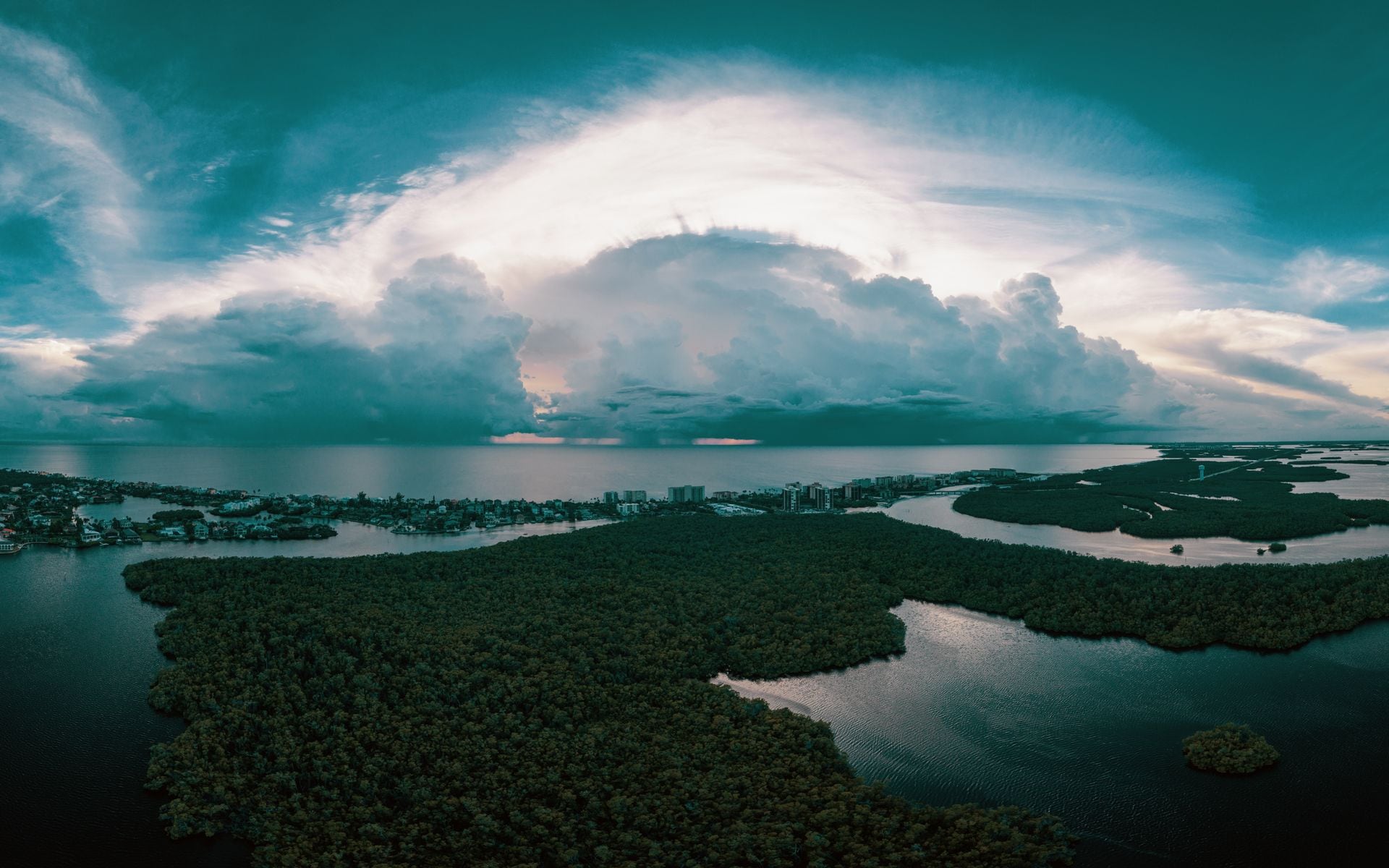
The wet season is hot, humid, and defined by the afternoon thunderstorm. Mornings usually start clear, the heat and humidity build through midday, and storms fire up around 2 or 3 p.m. before clearing by evening. Plan your beach time, boat trips, and outdoor activities for the morning and you will dodge most of the rain. Lightning is the real hazard, so get off the water and off the beach the moment storms build.
The upside of summer is warm water in the upper 80s, long daylight, and lower prices outside the Orlando family peak. September and early October are the quietest weeks of the whole year. They also overlap the height of hurricane season, so read our Florida hurricane season guide and consider travel insurance before you book those dates. Whichever month you choose, packing for Florida heat and sudden rain is its own skill, covered in our what to pack for Florida guide.
Frequently asked questions
What is the rainiest month in Florida?
June through September are the wettest months, with July and August seeing the most rainfall thanks to near-daily afternoon thunderstorms. The rain usually comes in short, heavy bursts that clear within an hour, so it rarely wipes out a whole day.
How cold does Florida get in winter?
In Central and South Florida, winter highs sit in the low 70s with nighttime lows around 50. When a cold front moves through, North Florida and the Panhandle can drop into the 40s at night. South Florida and the Keys rarely fall below the low 60s after dark.
When is the water warm enough to swim in Florida?
South Florida and the Keys are swimmable year round. The Gulf and Atlantic in Central Florida warm to comfortable swimming by April and stay warm through October. The Panhandle Gulf is best from May through October, since December and January water turns too cold there for a long swim.
Does it rain every day in Florida in summer?
Close to it, but only for a short window. From June through September, expect an afternoon thunderstorm most days, usually building around 2 to 3 p.m. and passing within an hour. Mornings are typically clear, which is why locals do their outdoor plans early.