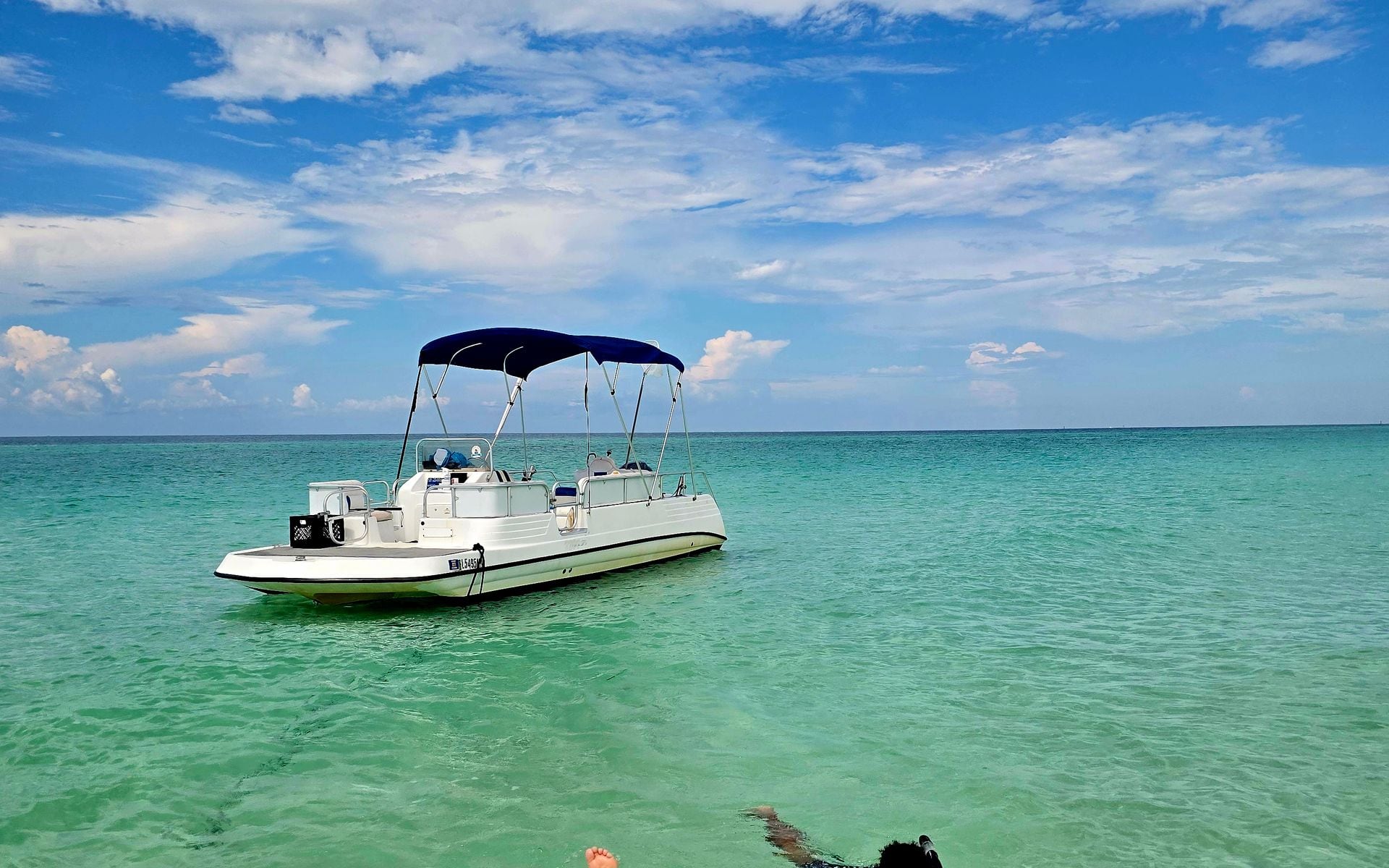
The Florida Keys and the coral reef
The reef runs the length of the Florida Keys, and the shallow patches sit close enough to shore for easy snorkeling in 5 to 20 feet of water. John Pennekamp Coral Reef State Park in Key Largo was the first undersea park in the country and runs snorkel, scuba, and glass-bottom boats out to the reef several times a day, including the underwater Christ of the Abyss statue. It is the natural first stop on any reef trip.
In Key West, Sunset Watersports Key West on William Street and Fury Key West Watersports on Greene Street both run half-day reef snorkel trips with gear included, and Sebago Watersports on Elizabeth Street pairs reef snorkeling with sail-and-snorkel combos. Up in Islamorada, Robbie's of Islamorada on the Overseas Highway is the launch point for reef and backcountry trips and the famous tarpon feeding dock. All of these sit right along the Florida Keys road trip route.
What to expect: reef, wrecks, and springs
Beginner snorkelers do best on the shallow Keys patch reefs, where the water is warm and calm on a light-wind day. Certified divers can go deeper to the reef walls and the wreck sites, including the Vandenberg off Key West, a 520-foot ship sunk as an artificial reef in 2009 that now sits in about 100 feet of water. On the Gulf side, Boogies Watersports in Destin runs snorkel trips to the jetties and near-shore reefs where the Emerald Coast water turns clear and green in summer.
Do not overlook the freshwater. The springs run 72 degrees and gin-clear, and Bird's Underwater Manatee Dive Center in Crystal River guides winter snorkel trips near wild manatees under passive-observation rules. For more on the springs themselves, see our springs and swimming guide.
| Spot | Type | Level | Depth |
|---|---|---|---|
| John Pennekamp, Key Largo | Reef snorkel/dive | All | 5 to 30 ft |
| Vandenberg wreck, Key West | Dive | Advanced | ~100 ft |
| Destin jetties | Snorkel | Beginner | 5 to 15 ft |
| Crystal River springs | Manatee snorkel | Beginner | 5 to 20 ft |
When the water is clearest
Reef visibility in the Keys is best in summer, roughly June through September, during calm, light-wind spells when the water can open up to 60 or 80 feet. Winter cold fronts stir up the reef and cancel boats for a day or two at a time, so build flexibility into a winter trip. Water temperatures range from the mid-70s in winter to the high 80s in late summer, warm enough that many snorkelers skip the wetsuit May through October.
Crystal River manatee snorkeling flips the calendar: it runs November through March when the animals crowd the warm springs. Book morning trips for the calmest water and the best manatee activity.
How to book and stay safe
Half-day reef snorkel trips run roughly $50 to $90 per person with gear, and two-tank certified dives run about $100 to $160. Reserve a day or two ahead in peak season and check the operator's cancellation policy, since wind and cold fronts do scrub trips. You can compare the full lineup of dive and snorkel outfitters in the dive and snorkel operators directory.
Never touch or stand on coral, both to protect the reef and because fire coral and urchins sting. Watch for boat traffic and always dive within your certification. If you want to combine reef time with fishing the same waters, our fishing charters guide covers the Keys and Gulf charters, and airboat and swamp trips are in the airboat and Everglades tours guide.
Getting certified and gearing up
You do not need certification to snorkel, and the shallow Keys reefs are ideal for first-timers with just a mask, snorkel, and fins, all provided on the boat trips. To scuba dive, you need an open-water certification, and many Keys operators run resort courses that get you diving in a day under an instructor, with full certification taking three to four days. Sunset Watersports Key West and Fury Key West Watersports both handle beginners alongside experienced divers.
The Keys are the easiest base, reachable by the drive down US-1 from Miami (MIA) or Fort Lauderdale (FLL), about 1.5 hours to Key Largo and 3.5 to 4 hours to Key West. Bring reef-safe sunscreen, since regular sunscreen harms coral, and a rash guard for sun and jellyfish. Book trips a day or two ahead in peak season and build in a flexible day for weather. A reef trip pairs well with the wider drive in our Florida Keys road trip guide.
Frequently asked questions
Where is the best snorkeling in Florida?
The Florida Keys have the only living coral barrier reef in the continental US. John Pennekamp Coral Reef State Park in Key Largo and the reef trips out of Key West and Islamorada are the top spots, with warm, shallow water good for beginners.
When is the water clearest for diving in Florida?
Summer, roughly June through September, brings the best reef visibility in the Keys during calm spells, sometimes 60 to 80 feet. Winter cold fronts stir up the water and can cancel boats for a day or two.
Can you snorkel with manatees in Florida?
Yes, at Crystal River from November through March, where guided operators like Bird's Underwater run in-water manatee trips under passive-observation rules. It is the only place in Florida where legal in-water manatee snorkeling is allowed.
How much does a snorkel or dive trip cost in Florida?
Half-day reef snorkel trips run about $50 to $90 per person with gear included. Two-tank certified dives run roughly $100 to $160. Book a day or two ahead in peak season and check the operator's weather cancellation policy.


