Three entrances that do not connect
The single most useful thing to understand before you go is that the Everglades has three separate entrances, and no road links them inside the park. The Homestead entrance in the southeast is the main one, with the 38-mile park road running down to Flamingo on Florida Bay past the Royal Palm and Pa-hay-okee boardwalks. Shark Valley, on the Tamiami Trail (US-41) west of Miami, is where you find the 15-mile tram loop and the concrete observation tower. Everglades City in the northwest opens onto the mangrove maze of the Ten Thousand Islands. Choose one region per day, because driving between them can take two hours or more.
Most first-time visitors base out of Miami or Homestead and hit the Homestead road and Shark Valley on separate days. The park sits in South Florida, so you can pair it with a Miami stay or a night in Homestead before continuing to the Keys. Entry is 35 dollars per vehicle, good for seven days, or free with the America the Beautiful annual pass. If you want the full lineup of protected land in the state, the best national parks in Florida roundup covers all three of the state's parks side by side.
When to go and what the season really means
The Everglades runs on two seasons, not four. The dry season from November through April is the time to come: the water drops, wildlife concentrates around the remaining gator holes and sloughs, the humidity eases, and the mosquitoes are bearable. This is peak birding, with wood storks, roseate spoonbills, and herons crowding the shallows. The wet season from May through October is hot, buggy, and prone to daily afternoon thunderstorms, and many rangers will tell you straight that summer is the hardest time to enjoy the park on foot.
Bring more water than you think you need, wear a hat and long sleeves for sun and bugs, and start early to beat both the heat and the storms. Alligators live in nearly every body of fresh water here, so keep your distance and never feed wildlife. If you are planning your calendar around the state as a whole, the national and state parks guide lays out which parks reward which months.
Airboats, tram rides, and getting on the water
Airboats are not allowed inside the main park, so the classic high-speed rides run on the park's edges and in the adjacent water conservation areas. From the east side near Fort Lauderdale, Everglades Holiday Park Airboat Tours on Griffin Road and Everglades Swamp Tours off Everglades Parkway both run captained rides into the sawgrass with alligator and wading-bird viewing, and both draw big crowds for a reason. Inside the park at Shark Valley, the two-hour ranger-narrated tram loop is the low-effort way to see gators sunning along the canal, and you can rent a bike to ride the same 15-mile loop at your own pace.
Down at Flamingo on the Homestead road, boat tours push out into Florida Bay and the backcountry where you have a real chance at manatees, crocodiles, and dolphins. Everglades City is the launch point for kayak and boat trips through the Ten Thousand Islands. Whichever you pick, book ahead on winter weekends, when the park is at its busiest.
Pairing the Everglades with the rest of South Florida
The Everglades is easy to fold into a larger South Florida trip. It sits within about an hour of downtown Miami and the same distance from the northern Keys, so a common loop is two nights in Miami Beach, a full day in the park, and then a drive south. Just offshore of the same coastline is Biscayne National Park, which is 95 percent water and reached only by boat, making it a natural companion to a land day in the Glades.
If you want the classic contrast, spend one morning on the sawgrass tram at Shark Valley and the next snorkeling a reef out of Biscayne. The two parks are less than an hour apart by car and show you the two halves of what makes South Florida wild: the freshwater river of grass on one side and the coral and mangrove of the bay on the other.
Frequently asked questions
How long do you need at Everglades National Park?
Plan a minimum of a half day for one region, and a full day if you want to combine the Shark Valley tram with the Homestead road down to Flamingo. Because the entrances do not connect, seeing more than one area usually means committing a separate day to each.
What is the best time of year to visit the Everglades?
The dry season from November through April, when wildlife gathers around shrinking water, humidity drops, and mosquitoes ease off. Summer, from May through October, is hot, wet, and buggy with near-daily afternoon storms.
Can you see alligators in the Everglades?
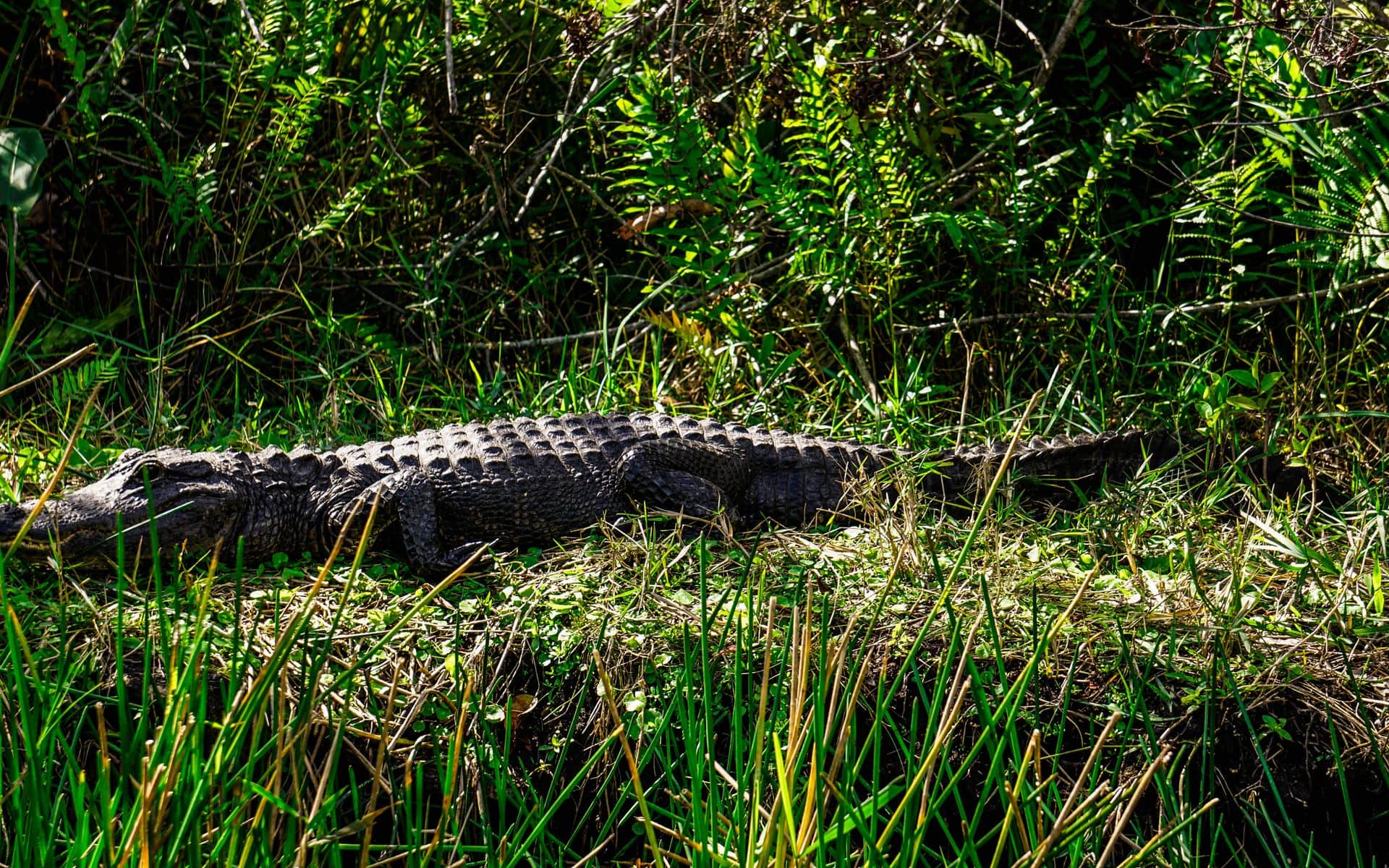
Yes, and it is nearly guaranteed in the dry season. The Anhinga Trail near the Homestead entrance and the Shark Valley tram loop are two of the most reliable spots to see gators up close from a safe boardwalk or path. Never approach or feed them.
Do you need a car to visit the Everglades?
Effectively yes. There is no public transit to the entrances, and the three regions are spread across the southern tip of the state. A rental car out of Miami is the standard way in.
What is the entrance fee and how long is it good for?
A private vehicle pass is 35 dollars and covers everyone in the car for seven straight days, so a single pass works across the Homestead road and Shark Valley on separate days. Motorcycles are 30 dollars and walk-in or cyclist entry is 20 dollars. If you already hold the America the Beautiful annual pass at 80 dollars, entry is free, which pays off fast if you are also visiting Biscayne or other national parks on the same trip.