Getting there is the whole trip
There is no bridge and no road to the Dry Tortugas. You get there from Key West one of three ways: the Yankee Freedom ferry, a seaplane, or your own boat. The ferry is the standard choice, a roughly 2.5-hour crossing each way that includes breakfast, lunch, snorkel gear, and a fort tour, and gives you about 4.5 hours on the island. The seaplane is faster and pricier and gives you a clear overhead look at the reefs and wrecks on the way, with half-day and full-day options. Whichever you choose, this is a full-day commitment out of Key West.
The park sits at the far end of the Florida Keys, so you will base in Key West the night before to make the early departure. The ferry sells out weeks ahead in the winter and spring peak, so book as soon as your dates are set. For how it stacks up against the state's other parks, see the best national parks in Florida guide.
Fort Jefferson and the snorkeling off Garden Key
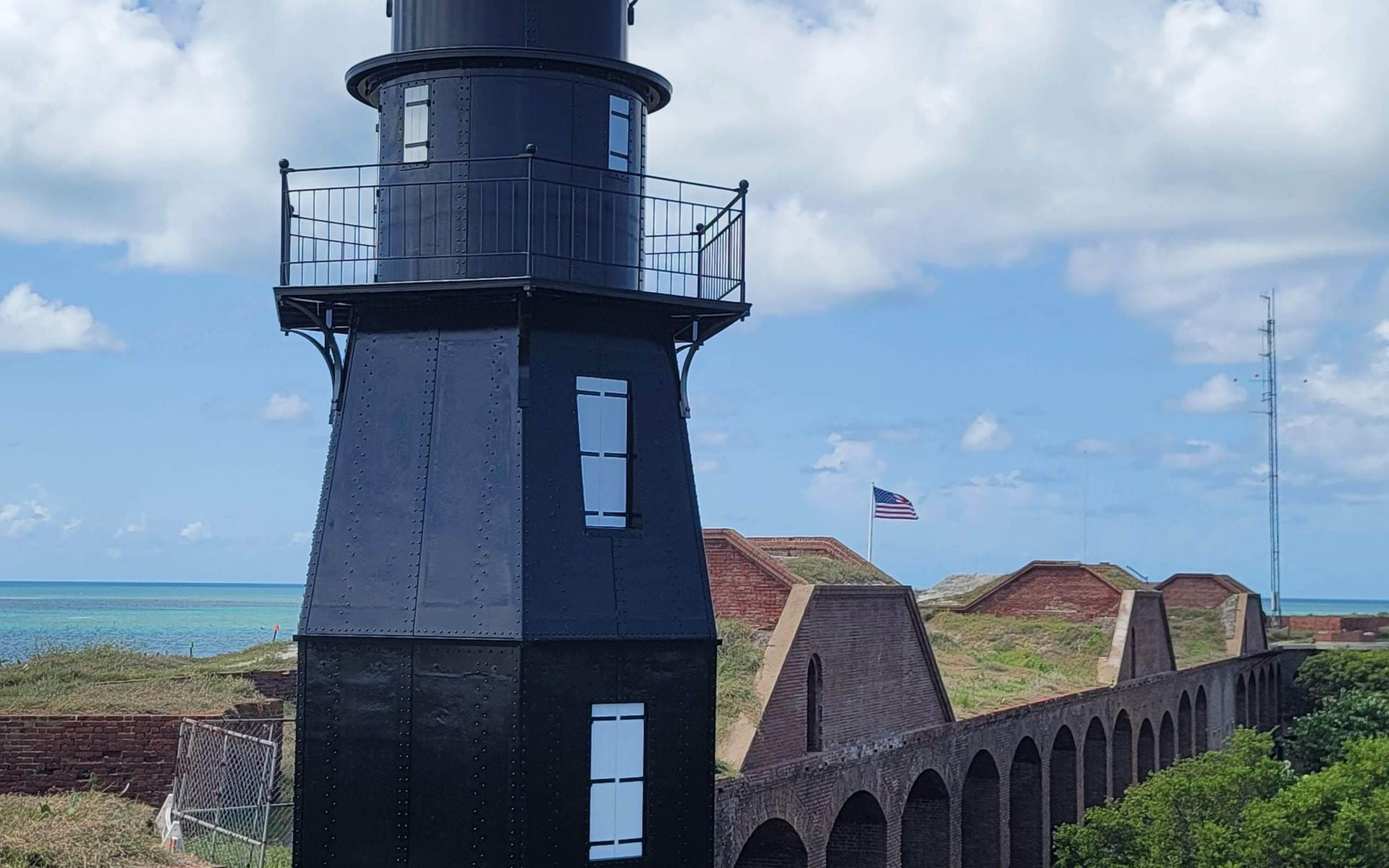
Garden Key is dominated by Fort Jefferson, a six-sided brick fortress begun in 1846 and one of the largest masonry structures in the Americas. You can walk the ramparts, tour the parade ground, and read the story of a fort that guarded the shipping lanes and later held prisoners. Give yourself time on the self-guided or ranger walk before you swim.
The snorkeling here is the payoff. The water off the swim beach and around the old coaling docks and moat wall is some of the clearest in Florida, with coral heads, reef fish, and the chance of sea turtles and tarpon, all within wading distance of the sand. Bring your own gear or use the ferry's, and plan your time so you get at least a couple of hours in the water before the boat leaves. The national and state parks guide covers how the Tortugas fits a wider parks itinerary.
Basing in Key West and running the reef
Because the Tortugas eats a full day, most visitors spend two or three nights in Key West around it. The night before your early ferry, stay somewhere central near the harbor. Opal Key Resort & Marina on Front Street sits right on the water a short walk from the ferry terminal, which makes the pre-dawn start easier.
On your other Key West days, the reef closer to town is worth a trip too. Fury Key West Watersports and Sunset Watersports Key West both run snorkel and reef boats from the downtown waterfront, and Danger Charters runs sailing and snorkel trips into the backcountry. If you would rather stay on land, Key Largo to the north is billed as the diving capital of the world and makes a strong second Keys stop on the drive back.
What to pack and how to plan the day
The Tortugas has no stores, no shade to speak of beyond the fort, and limited fresh water, so pack like you are heading somewhere genuinely remote: sunscreen, a hat, a rash guard, plenty of water, and any food beyond what the ferry provides. Camping is available on Garden Key for a small number of primitive sites, but they book far ahead and require you to bring everything, including all your water.
There are no timed-entry reservations for the park itself, but the ferry capacity is the real limit, and it is what sells out. If your dates are fixed in winter or spring, reserve the crossing before you lock anything else, then build your Key West stay around it. The reward is one of the most remote and least crowded national parks in the country, sitting alone in clear blue water at the end of the Keys.
Ferry versus seaplane, and which to pick
The two ways most visitors reach the park suit different trips. The Yankee Freedom ferry is the value option and gives you the longest island time, about 4.5 hours, along with breakfast, lunch, snorkel gear, and a fort tour rolled into the fare. The crossing takes about 2.5 hours each way, and the boat has cabins and a snack bar, though the open water can be rough on a windy day, so bring seasickness medication if you are prone to it.
The seaplane costs more but turns the transit into a highlight, flying low over the reefs, wrecks, and shifting blues of the flats on the way out, and it offers both half-day and full-day trips. Half-day seaplane visits give you roughly two and a half hours on Garden Key. Pick the ferry for maximum island time and value, and the seaplane if the aerial view and a shorter, faster trip are worth the premium.
Frequently asked questions
How do you get to Dry Tortugas National Park?
Only by the Yankee Freedom ferry, a seaplane, or a private boat, all departing from Key West. The ferry is the most common choice, a roughly 2.5-hour crossing each way that includes gear, meals, and about 4.5 hours on the island.
Do you need to book the Dry Tortugas ferry in advance?
Yes. The ferry sells out weeks ahead in the winter and spring peak season, and its capacity is the main limit on how many people reach the park each day. Book the crossing as soon as your dates are set.
Is the snorkeling good at Dry Tortugas?
It is some of the clearest, most rewarding easy-access snorkeling in Florida, right off the beach and around Fort Jefferson's moat wall and old coaling docks. Expect coral, reef fish, and the chance of turtles and tarpon within wading distance.
Can you stay overnight at Dry Tortugas?
There is primitive camping on Garden Key at a small number of sites, but they book far ahead and require you to carry in everything, including all your fresh water. Most visitors do it as a day trip from Key West instead.