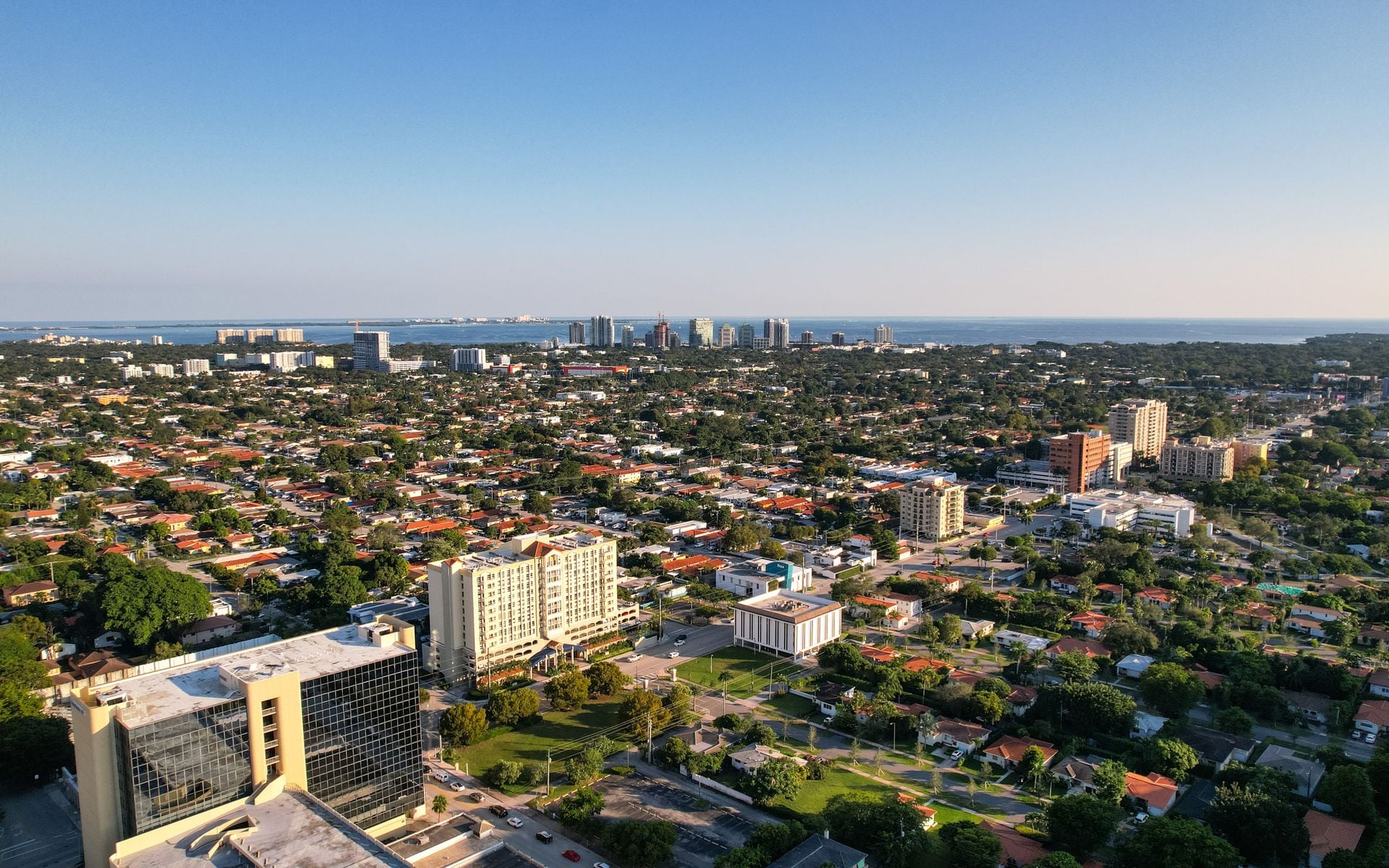
Miami and Miami Beach: Art Deco, food, and the water
Miami is the international heart of South Florida, with the murals of Wynwood, the Cuban cafes of Little Havana, the estate gardens of Vizcaya, and a food scene that reflects the whole Caribbean and Latin America. CVI.CHE 105 is a well-known Peruvian ceviche spot in the Wynwood area, Rusty Pelican serves seafood and steaks over the water on Key Biscayne with the downtown skyline across the bay, and Cajun Boil Seafood Restaurant in Brickell does messy seafood boils near the high-rises. To get oriented, Miami Culinary Tours walks you through the neighborhoods with tastings, Big Bus Tours Miami covers the Art Deco district and waterfront in a half day, and The Miami Experience Boat Party runs sightseeing cruises past the celebrity mansions of Star Island. For a downtown base near the bay, the InterContinental Miami sits on Chopin Plaza a short walk from the waterfront.
Across the causeways, Miami Beach is the barrier island of pastel Art Deco hotels along Ocean Drive, wide sand, Lincoln Road shopping, and the city's nightlife. The lodging runs from the huge oceanfront Fontainebleau Miami Beach on Collins Avenue to the design-forward 1 Hotel South Beach and the mid-Collins Loews Miami Beach Hotel. Winter and spring are peak and priciest here, with oceanfront rooms often running $350 to $700 a night, while summer is hot, humid, and noticeably cheaper. For dining, Ole Ole Steak House and the rooftop MILA are two of the higher-end names on and around Lincoln Road, and Havana Vieja on Washington Avenue is the go-to for traditional Cuban plates.
Fort Lauderdale: the boating capital
Fort Lauderdale, just north of Miami Beach, runs calmer and more family-friendly, with a walkable beach promenade along A1A, the canals and water taxi that earn it the Venice of America nickname, and the restaurants of Las Olas Boulevard. Riverfront Gondola Tours floats you through the residential canals, and Café Bastille is a well-reviewed French bistro downtown. It makes a quieter base than South Beach with easy access to both the beach and the Everglades.
Fort Lauderdale is also a jumping-off point for the wild side. Everglades Swamp Tours runs high-speed airboat rides straight from the Fort Lauderdale area into the sawgrass, and Everglades Holiday Park Airboat Tours on Griffin Road is another easy half-day option, both among the simplest ways to see alligators and wading birds without a long drive. Offshore, Fishing Headquarters and Uncharted Waters, both off Seabreeze Boulevard, run inshore and deep-sea charters for tarpon, sailfish, and mahi. Fort Lauderdale (FLL) is a major, often cheaper airport than Miami, which makes it a smart arrival point for the whole southeast.
The Everglades and Biscayne: two national parks at the edge of the city
Everglades National Park is the largest tropical wilderness in the country and the only place where alligators and crocodiles live side by side. It is a slow-moving river of sawgrass with three separate entrances that do not connect inside the park, so you pick one: the Shark Valley tram loop and its observation tower, the Gulf Coast boat tours near Everglades City, or the main road down to Flamingo from the Homestead entrance. Airboats run only in the private preserves along the northern edge, not inside the park itself. The dry season, roughly December through April, is the best time to visit, with fewer mosquitoes and wildlife concentrated at the water holes, and the park entry fee is $30 per vehicle, good for seven days.
Biscayne National Park is the strange twin: a park that is 95 percent water, just south of Miami off Homestead. It protects living coral reefs, mangrove shoreline, the northern Keys, and shipwrecks on the Maritime Heritage Trail, and you reach almost all of it only by boat. Snorkeling and diving trips run from the visitor center on calm days. Together the two parks let you see South Florida's wild half, sawgrass on one side and reef on the other, within an hour of downtown Miami.
Miami Beach or Fort Lauderdale: choosing your base
The main lodging decision in South Florida is which coast city to sleep in, and it comes down to how much scene you want versus how much calm. The table below sorts the trade-offs so you can match the base to the trip before you book.
| Base | Best for | Feel | Nearest airport |
|---|---|---|---|
| Miami Beach | Nightlife, Art Deco, scene | Busy, higher priced | MIA (20 min) |
| Downtown / Brickell Miami | Food, museums, city base | Urban high-rise | MIA (15 min) |
| Fort Lauderdale | Families, boating, value | Calmer, walkable beach | FLL (15 min) |
Both cities put you within an hour of the Everglades, Biscayne, and the top of the Keys, so the pick is about the vibe of home base rather than access. Fly into whichever airport is cheaper, since MIA and FLL are only about 40 minutes apart. The where to stay in Florida guide breaks down the neighborhoods in more detail.
When to go and how to get around
South Florida is tropical and warm all year, and it splits into two seasons: the dry, sunny winter from November through April, which is peak travel season and the best time for the Everglades and the beaches, and the hot, humid summer from May through October with near-daily afternoon storms. Hurricane season runs June through November and peaks late summer, so watch the forecast and consider travel insurance in those months.
Fly into Miami (MIA) or Fort Lauderdale (FLL), and rent a car if you plan to reach the Everglades, Biscayne, or the Keys, since transit does not cover them. Miami to Key West is about 3.5 to 4 hours down the Overseas Highway, and Tampa is roughly 4 hours across Alligator Alley, so plan the region as its own trip rather than a quick add-on. To weigh the metro beaches against the rest of the state, the best beaches in Florida guide sorts them out.
Frequently asked questions
Can you do the Everglades as a day trip from Miami?
Yes. Shark Valley, the closest main entrance, is about an hour from downtown Miami, and airboat operators along Tamiami Trail and near Fort Lauderdale run half-day trips. The dry season from December through April is the best time, with fewer mosquitoes and wildlife gathered at the water holes.
Should I stay in Miami Beach or Fort Lauderdale?
Miami Beach is the scene: Art Deco, nightlife, higher prices, and busier sand. Fort Lauderdale is calmer, more family-friendly, and often cheaper, with an easy beach promenade and quick access to the Everglades. Both put you within reach of the parks and the Keys.
How do you visit Biscayne National Park?
Almost entirely by boat. Biscayne is 95 percent water, so the reefs, shipwrecks, and islands are reached on snorkel, dive, or boat tours that run from the visitor center near Homestead on calm days. The mainland visitor center is free to walk, but the park itself is offshore.
Which airport is better for South Florida, Miami or Fort Lauderdale?
Both work, and they are only about 40 minutes apart, so book whichever is cheaper for your dates. Fort Lauderdale (FLL) is often the lower fare and sits closer to the northern beaches, while Miami (MIA) is handier for South Beach, Biscayne, and the drive down to the Keys.
How far is Miami from Key West?
About 3.5 to 4 hours by car down the Overseas Highway (US-1), the two-lane road that hops island to island. It is a scenic drive rather than a fast one, so plan a full half-day and leave early to beat traffic through the upper Keys.