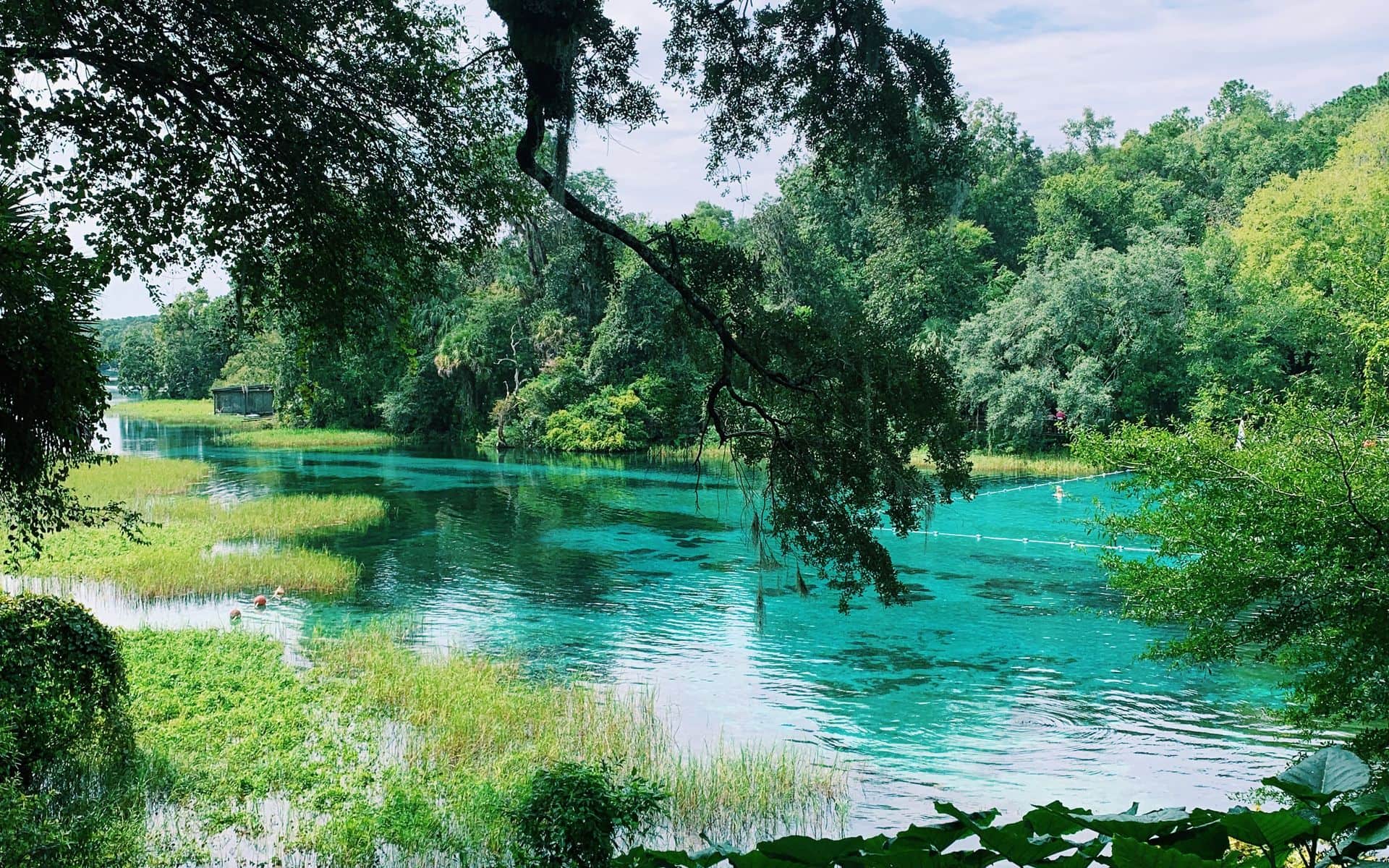
How Florida springs work
Florida sits on a limestone aquifer, and hundreds of springs push cool, filtered groundwater to the surface at a steady 72 degrees no matter the season. In summer that water feels cold and refreshing against 90-degree air. In winter it feels warm compared to the chilly forest, which is exactly why manatees crowd into the springs from November through March.
The clarity is the draw. On a calm day you can float over eelgrass and see fish, turtles, and the dark mouth of the spring vent far below. Most of the best springs are protected inside state parks, so you pay a small per-vehicle fee, usually $4 to $8, and popular ones fill on summer weekends and winter manatee days. Arrive before mid-morning to be safe.
The best springs for swimming
Wekiwa Springs State Park near Apopka, about 30 minutes north of Orlando, has a wide swimming basin, shaded lawns, and rental canoes for paddling the run, which makes it the easiest springs day for a theme-park trip. Silver Springs State Park in Ocala runs the famous glass-bottom boats over its deep, clear vents and has wild monkeys along the river, though swimming there is limited to the boat tours and paddling.
Blue Spring State Park in Orange City is the winter manatee headquarters, closing the swimming area to protect the animals from mid-November through early spring, then reopening for swimming and tubing in the warm months. For cool, clear tubing, Rainbow Springs near Dunnellon and Ichetucknee Springs north of Gainesville are the classics, with Ichetucknee's summer tube runs so popular the park caps daily entries.
| Spring | Near | Best for | Water temp |
|---|---|---|---|
| Wekiwa Springs | Orlando | Swimming, paddling | 72 degrees |
| Blue Spring | Orange City | Winter manatees | 72 degrees |
| Ichetucknee | Fort White | Summer tubing | 72 degrees |
| Silver Springs | Ocala | Glass-bottom boats | 72 degrees |
Manatees and snorkeling in the springs
Crystal River, about 90 minutes north of Tampa, is the one place in Florida where you can legally swim and snorkel near wild manatees in winter, always following the passive-observation rules that keep the animals safe. Operators run guided morning trips from November through March. For the full rundown, see our manatee and wildlife tours guide.
Many springs also snorkel beautifully in their own right, with clear water and eelgrass full of fish. If you want to move from freshwater clarity to the saltwater reef, the state's snorkeling and diving guide covers the Keys and the coral barrier reef. Paddling outfitters and guided spring trips are listed in the tours and boat trips directory.
When to go and what to bring
Summer, May through September, is peak springs season for beating the heat, and it is when tubing runs like Ichetucknee are best, so go early on weekends before the daily cap fills. Winter, November through March, is manatee season at Blue Spring and Crystal River, though the springs themselves feel cool against the cold air.
Bring water shoes for the limestone, a mask if you want to snorkel, and a dry bag. The 72-degree water can chill you faster than the ocean, so a rash guard or thin wetsuit helps on longer floats. After a spring day you are well placed for the national and state parks nearby, since most springs sit inside the state park system.
Getting to the springs
Most of the best springs cluster in central and north Florida, easy to reach from Orlando or Tampa by car. Wekiva and Rock Springs sit about 30 to 45 minutes north of Orlando, Silver Springs and Rainbow Springs are near Ocala about 90 minutes northwest, and Ichetucknee is a bit over two hours north near the Suwannee River country. Crystal River, the manatee capital, is roughly 90 minutes north of Tampa on US-19.
Fly into Orlando International (MCO) or Tampa International (TPA) for the best access, and plan to drive, since none of the springs sit on transit. Bring water shoes for the limestone, a mask for snorkeling, and cash or a card for the small per-vehicle park fee. Popular runs cap daily entries in summer, so arrive early on weekends. A springs day pairs well with a wider driving route like a Florida Keys road trip, and guided paddle trips are listed in the tours and boat trips directory.
Frequently asked questions
How cold are Florida springs?
Florida springs hold a steady 72 degrees year round. That feels cold and refreshing against summer heat but warm compared to a chilly winter morning, which is why manatees gather in them from November through March.
Which Florida spring is best for swimming?
Wekiwa Springs near Orlando is the easiest for a family swim, with a wide basin and shaded lawns. For tubing, Ichetucknee and Rainbow Springs are the classics, and Blue Spring is the top spot for winter manatee viewing.
Can you swim with manatees in Florida springs?
Yes, at Crystal River, the one place where guided in-water manatee snorkeling is legal in winter under passive-observation rules. Blue Spring closes its swimming area in winter to protect the manatees, so you watch from the boardwalk there.
Do Florida springs charge admission?
Most sit inside state parks and charge a per-vehicle fee of roughly $4 to $8. Popular springs like Ichetucknee cap daily entries in summer, so arrive before mid-morning on weekends and holidays.
What should you bring for a day at the springs?
Pack water shoes for the sharp limestone, a mask if you plan to snorkel, and a dry bag for your phone. The steady 72-degree water chills you faster than the ocean, so a rash guard or thin wetsuit helps on longer tube floats. Bring cash or a card for the small per-vehicle park fee and arrive before mid-morning on summer weekends.