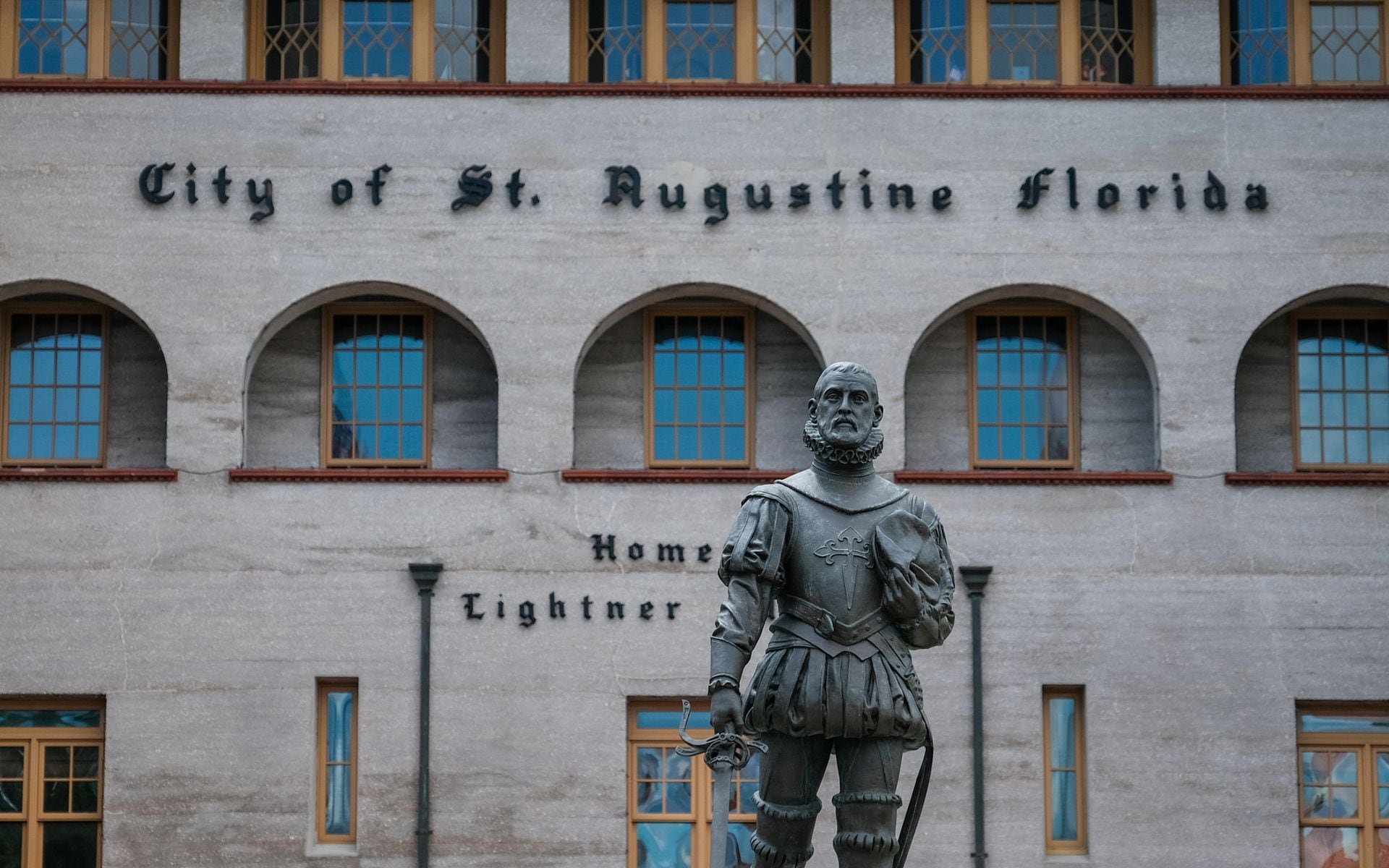
A city built in 1565
St. Augustine's claim is real: settled by the Spanish in 1565, it predates Jamestown and Plymouth and is the oldest continuously occupied European-founded city in the United States. The compact historic core is genuinely walkable, and much of a visit is simply wandering the narrow streets on foot. Park once and leave the car, since the old town is tight and the parking garage on West Castillo Drive is the easiest place to leave it.
The city sits on the First Coast in North Florida, about two hours north of Orlando and 45 minutes south of Jacksonville. That location makes it a natural stop between the theme parks and the Georgia line, and its mix of history and beach earns it a place among the Best Beach Towns in Florida for travelers who want more than sand.
The fort, the college, and the Colonial Quarter
The Castillo de San Marcos is the anchor, a 17th-century Spanish fort built of coquina, a soft local shell stone that absorbed cannon fire rather than shattering. It is a national monument on the bayfront, and the ramparts give the best view over Matanzas Bay. From there the cobblestone streets of the Colonial Quarter and St. George Street run through the old town, lined with shops, taverns, and reconstructed colonial buildings.
Flagler College occupies the former Hotel Ponce de Leon, a Gilded Age landmark built by railroad magnate Henry Flagler, and its Spanish Renaissance courtyard is worth the short guided tour. The Lightner Museum across the street fills another Flagler hotel. To get oriented, Old Town Trolley Tours St Augustine runs hop-on, hop-off loops that hit the main sights and let you cover ground between the fort, the college, and the bayfront.
The water and the beaches
Anastasia Island, just across the Bridge of Lions, holds the town beaches and a state park with dunes and calm swimming. The St. Augustine Lighthouse on the island is a 219-step climb to a working light with a view back over the old town. For time on the water itself, Florida Water Tours runs boat tours, sunset cruises, and eco trips out of the city yacht basin, a good way to see the fort and waterfront from the bay.
The Atlantic here has real surf, so watch the beach flags for rip currents. Golfers can head 20 minutes north to Ponte Vedra Beach, where TPC Sawgrass and its famous island green at the 17th host the Players Championship each March and take public play the rest of the year. For a fuller picture of the coastline, the region hub covers the rest of North Florida's First Coast.
How long to stay and what to pair it with
Two nights lets you cover the fort, the historic core, and a beach afternoon without rushing. The old town gets crowded midday, so start early at the Castillo and save the evening for the softly lit streets, which are at their best after the day-trippers leave. St. Augustine leans into the season with a huge holiday lights display, Nights of Lights, from mid-November through January.
For a longer North Florida loop, the quieter Victorian seaport of Amelia Island sits about 90 minutes north near the Georgia line, and the manatees and springs of Crystal River and the Nature Coast are about two and a half hours southwest across the peninsula. Fly into Jacksonville (JAX) at 45 minutes or Orlando (MCO) at about two hours, and drive. Book lodging in or near the historic core so you can walk to the fort and the shops, since parking in the old town is tight and the garage on West Castillo Drive is the reliable fallback.
Frequently asked questions
Why is St. Augustine called the oldest city in the US?
It was founded by the Spanish in 1565, which makes it the oldest continuously occupied European-founded city in the United States, older than Jamestown or Plymouth. Its Spanish colonial history is visible in the coquina-stone Castillo de San Marcos and the cobblestone streets of the old town.
How many days do you need in St. Augustine?
Two nights is a comfortable amount. That gives you time for the Castillo de San Marcos, the walkable historic core and Flagler College, and an afternoon at the Anastasia Island beaches, with an evening to enjoy the old town after the day crowds leave.
How far is St. Augustine from Orlando?
About two hours north by car on I-95. It sits 45 minutes south of Jacksonville, so it works either as a day trip from Orlando or, better, as a two-night stop on a North Florida loop toward Amelia Island and the Georgia line.
Does St. Augustine have good beaches?
Yes. Anastasia Island, just across the Bridge of Lions, has town beaches and a state park with dunes and calmer swimming, plus the St. Augustine Lighthouse. The Atlantic surf here is real, so check the beach flags for rip currents before you swim.
What does it cost to visit the Castillo de San Marcos?
Entry to the Castillo de San Marcos is about 15 dollars for adults, good for seven days, and children 15 and under are free with a paying adult. It is a national monument, so the America the Beautiful pass covers it. Parking in the old town is tight, so the paid garage on West Castillo Drive at roughly 15 dollars a day is the reliable place to leave the car and walk to the fort, St. George Street, and Flagler College from there.