The island and its neighborhoods
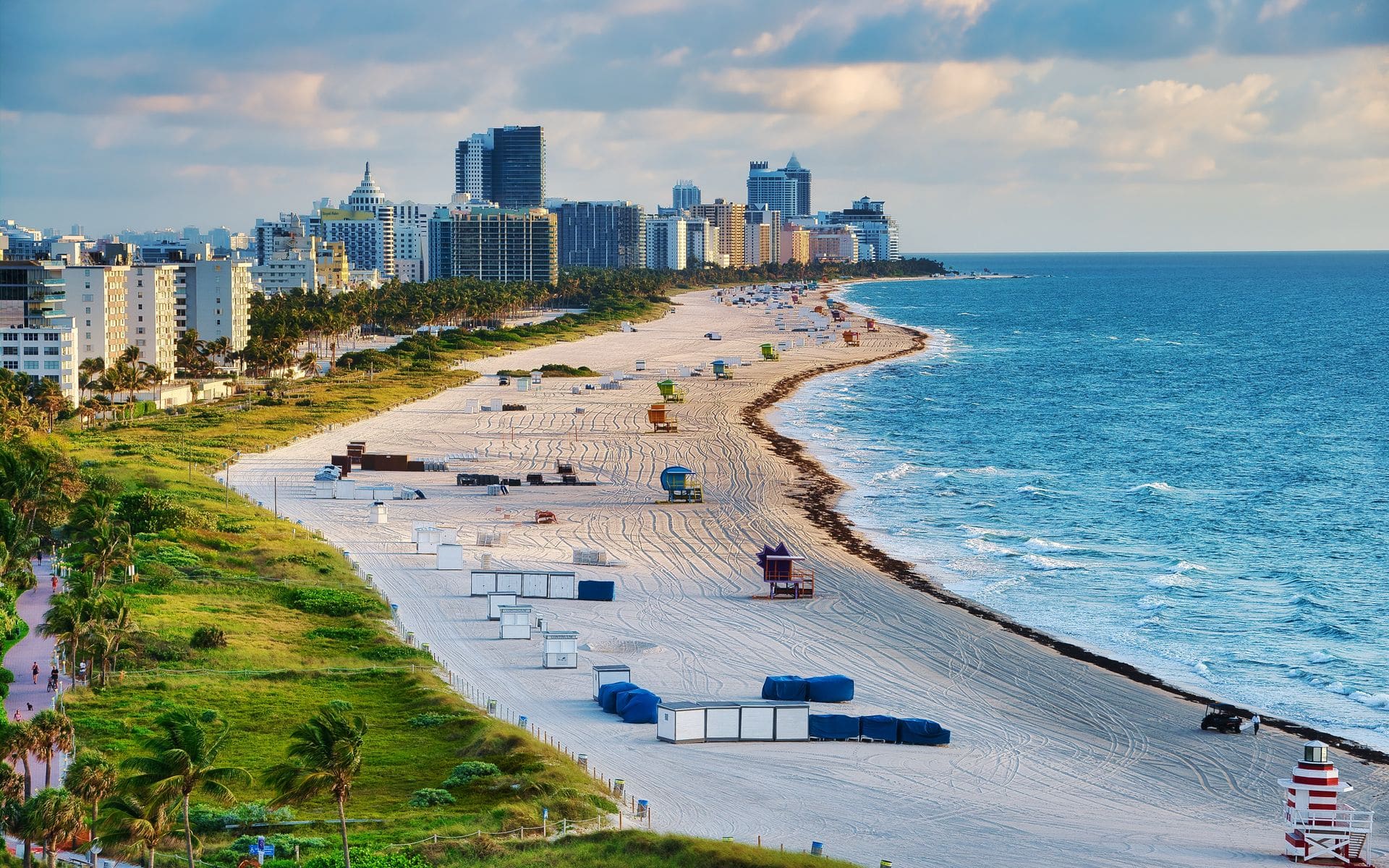
Miami Beach is a barrier island reached by causeways from the mainland, and it is a different place from Miami proper across the bay. South Beach at the south end holds the Art Deco Historic District, the pastel 1930s hotels of Ocean Drive, the pedestrian shopping of Lincoln Road, and the densest nightlife. Mid-Beach and North Beach up Collins Avenue are quieter and more residential, with big resort hotels and calmer sand.
The beach itself is the draw: a wide, groomed strip of Atlantic sand that runs the length of the island. It is one of the best-known entries on any list of the best beaches in Florida, and it sits within a short drive of the rest of South Florida. Just know that ocean surf here can be lively, so watch the beach flag warnings and respect rip currents.
Art Deco, the beach, and the scene
The best free thing to do in Miami Beach is walk. A morning stroll through the Art Deco district along Ocean Drive and Collins Avenue, ideally on a guided walking tour, shows off the 1930s pastel architecture before the day heats up. Then it is beach time: rent a chair and umbrella, swim within the flagged areas, and expect strong sun year round, so plan for shade and sunscreen.
For food, the island is stacked with options. Ole Ole Steak House is a heavily reviewed South Beach steakhouse, CVI.CHE 105 South Beach turns out fresh Peruvian ceviche, and Havana Vieja serves Cuban classics if you want to eat local. Lincoln Road's open-air mall is the easy stroll-and-graze option in the evening before the nightlife picks up.
Where to stay on the sand
Lodging on Miami Beach runs from Art Deco boutiques to big oceanfront resorts. Fontainebleau Miami Beach on Collins Avenue is a large oceanfront resort with multiple pools and extensive dining, aimed at guests who want an all-in-one South Beach base. 1 Hotel South Beach, also on Collins, is a modern, design-forward beachfront hotel with a rooftop pool, at the higher end of the price range. Loews Miami Beach Hotel sits right on the sand near Lincoln Road, putting you steps from the restaurants and nightlife.
Prices swing hard by season here. Winter and spring, roughly December through April, are peak and most expensive, especially around holidays and events. Summer drops rates but brings heat, humidity, and near-daily afternoon storms, which usually pass in an hour.
When to go and how it connects
Miami Beach is warmest and most crowded in the winter dry season, when snowbirds and spring-breakers fill the island and rooms are priciest. Summer is the value season if you can handle the heat and the storms, and the water is warm and swimmable year round. Hurricane season runs June through November, so watch the forecast in those months.
The island is an easy base for the wider region. Downtown Miami and the murals of Wynwood are minutes across the causeway, Fort Lauderdale is about 45 minutes up the coast, and the Everglades and the Keys are both within an hour to the south and west. Fly into Miami International (MIA) or Fort Lauderdale (FLL) and drive over the causeway to the sand.
Getting around and getting there
Miami Beach is easy to reach and easy to move around once you are on it. Fly into Miami International (MIA), about 20 to 30 minutes away over the causeway, or Fort Lauderdale (FLL), about 45 minutes north, and drive or ride over. Once on the island, walking, biking, and rideshare beat driving, since parking is expensive and street traffic on Ocean Drive crawls in the evenings.
If you plan to explore the wider region, keep the rental car for the parks and the Keys but leave it in the garage on beach days. The free Miami Beach Trolley loops the island, and the causeways put downtown Miami, Wynwood, and the airport within an easy reach when you want a change of scene from the sand.
Frequently asked questions
What is the difference between Miami and Miami Beach?
Miami is the mainland city with downtown, Wynwood, Little Havana, and Brickell. Miami Beach is a separate barrier island across the causeways, home to South Beach, the Art Deco district, Ocean Drive, and the wide Atlantic sand. They are a short drive apart but distinct places.
When is the cheapest time to visit Miami Beach?
Summer, roughly May through October, brings the lowest room rates, along with heat, humidity, and near-daily afternoon storms that usually pass quickly. Winter and spring are peak and most expensive, especially around holidays.
Is South Beach walkable?
Very. The Art Deco district, Ocean Drive, Lincoln Road, and the beach are all close together, and walking is the best way to see the pastel 1930s architecture and reach the restaurants and nightlife. You do not need a car once you are on the island.
Is the ocean safe to swim at Miami Beach?
Generally yes within the lifeguarded, flagged areas, but Atlantic surf can be lively and rip currents occur, so always check the beach flag warnings before swimming and heed lifeguard guidance. Sun is strong year round, so plan for shade and sunscreen.
Where should you eat on Miami Beach beyond the big names?
Española Way, the pedestrian lane off Washington Avenue, is a good hunting ground. Españolita Miami Beach turns out Spanish small plates on the street itself, and nearby Il Pastaiolo on Collins Avenue does fresh handmade pasta if you want an Italian night. For a rooftop dinner, MILA on Meridian Avenue serves Mediterranean-Asian plates above Lincoln Road. Reserve ahead on winter weekends, when South Beach tables book out, and note that many Ocean Drive spots add an automatic service charge, so check the bill before tipping again.