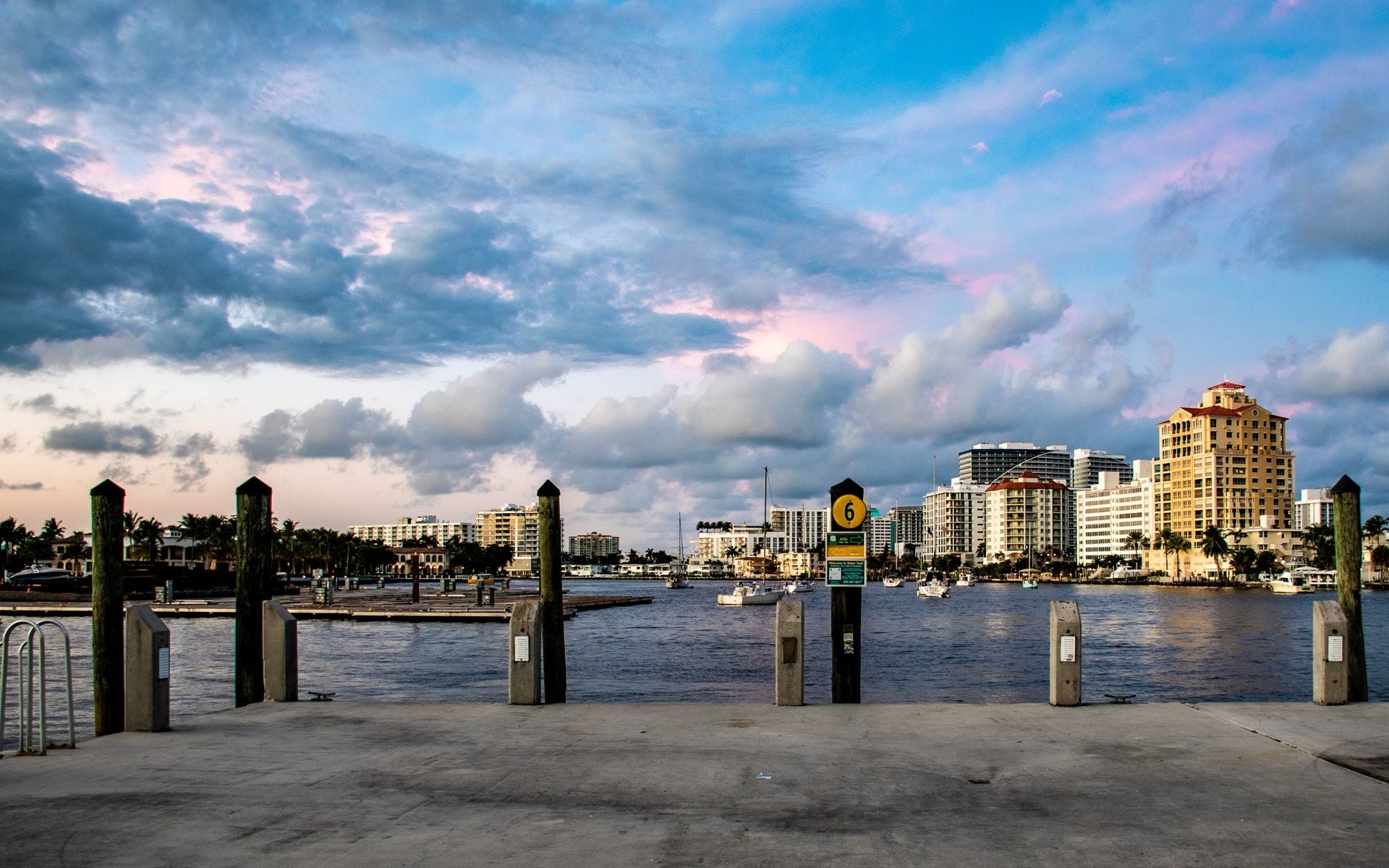
Two towns across the water
Palm Beach and West Palm Beach are a pair, split by the Intracoastal Waterway. Palm Beach is the barrier island: a wealthy, low-key resort town of manicured estates, the Gilded Age architecture of Henry Flagler, and the sand along the Atlantic. West Palm Beach, on the mainland across the water, is the livelier, more affordable side, with the CityPlace and Clematis Street dining and nightlife, the waterfront, and the region's cultural venues.
Together they sit in South Florida, about 70 minutes north of Miami and 45 minutes north of Fort Lauderdale, with their own airport, Palm Beach International (PBI). The setup lets you sleep and shop on the polished island and eat and go out on the more casual mainland, or split the difference by staying in West Palm and driving over the bridge to the beach.
Worth Avenue, the Flagler Museum, and the beach
On the island, Worth Avenue is the draw: a few blocks of high-end boutiques, courtyards, and cafes that make for a good stroll even if you are only window-shopping. The Flagler Museum, set in Henry Flagler's 1902 Whitehall mansion, tells the story of the railroad baron who opened up Florida's east coast and built the resort era, and it is the top cultural stop in town.
The Palm Beach oceanfront is quieter and more upscale than the beaches to the south, with public access points along the island. As one of the more refined entries on any list of the best beaches in Florida, it trades crowds and nightlife for calm sand and money. Spend a morning on the beach, an afternoon on Worth Avenue, and an evening across the water in West Palm.
Where to stay and eat
The landmark stay is The Breakers Palm Beach, a historic 1926 oceanfront resort on South County Road with private beach access, golf, and fine dining, long the address for the island's affluent visitors and golfers. It is the splurge, and it defines old Palm Beach luxury. If you want a lower price point, West Palm Beach across the Intracoastal has a wider range of hotels within a short drive of the island.
Dining follows the same split: Palm Beach island leans upscale and clubby, while West Palm's Clematis Street and the waterfront have a broader, livelier range of restaurants and bars. Reserve ahead on winter weekends, when the snowbird season fills tables across both towns from December through April.
When to go and how it connects
The Palm Beaches run on the classic South Florida calendar: December through April is peak, dry, warm, and priciest, when the winter-escape crowd arrives in force. Summer is hot and humid with afternoon storms and lower rates, and hurricane season runs June through November. The water is warm and swimmable year round.
The area connects easily up and down the coast. Everglades National Park is reachable to the south and west for a wildlife day, Fort Lauderdale and Miami are 45 to 70 minutes down I-95, and Brightline runs fast trains from West Palm Beach south to Fort Lauderdale and Miami and north to Orlando. With PBI as its own airport, Palm Beach is an easy, upscale entry point to the southeast coast.
Getting around and day trips
The Palm Beaches are compact and easy to navigate. Bridges link the island to the mainland in minutes, so you can sleep in West Palm Beach, cross for a Worth Avenue morning, and be back for dinner on Clematis Street without much effort. A car is handy for exploring, but the walkable cores of both towns mean you will park and stroll a lot.
For day trips, the area reaches in every direction. The beaches and springs of the Treasure Coast lie to the north, the Everglades open up to the west and south for a wildlife day, and Fort Lauderdale and Miami are a short drive or Brightline ride south. Palm Beach International (PBI) keeps arrivals simple, making the Palm Beaches an easy, upscale hub for the lower east coast.
Frequently asked questions
What is the difference between Palm Beach and West Palm Beach?
Palm Beach is the wealthy barrier-island resort town with Worth Avenue, the Flagler Museum, and quiet oceanfront. West Palm Beach is the livelier, more affordable mainland city across the Intracoastal, with Clematis Street dining, nightlife, and the waterfront. They are connected by bridges.
Is Worth Avenue worth visiting?
Yes, even if you are not shopping. Its few blocks of high-end boutiques, hidden courtyards, and cafes make for a pleasant stroll, and it is the signature scene on Palm Beach island. Pair it with the nearby Flagler Museum for a half-day on the island.
How far is Palm Beach from Miami?
About 70 minutes north by car on I-95, or a fast Brightline train ride. Fort Lauderdale sits about 45 minutes south, and Palm Beach has its own airport, Palm Beach International (PBI), for direct access.
When is the best time to visit the Palm Beaches?
December through April is the dry, warm peak season with the highest prices and the winter-escape crowd. Summer is hot and humid with afternoon storms and lower rates. Hurricane season runs June through November.
Do you have to stay at The Breakers to enjoy Palm Beach?
Not at all. The Breakers is the landmark splurge, but West Palm Beach across the Intracoastal has a much wider range of hotels within a 10-minute drive of the island, which keeps the trip affordable. You can base on the mainland, cross one of the bridges for a Worth Avenue morning and the Flagler Museum, then head back over for dinner and drinks on Clematis Street. Parking meters on the island run about 3 dollars an hour, so budget for that on a shopping day.