Florida is the easiest state in the country to plan a family trip around, and also the easiest to overplan. It is tempting to book five straight days of theme parks and call it a vacation. Do that and you will spend most of the trip standing in line in the heat while the kids melt down. The better move is to mix it up: a couple of park days, a couple of beach days, and a wildlife day that costs a fraction of a Disney ticket and sticks in their memory longer. Here is how to build that trip.
Use this alongside the Florida Travel Guide for the full state picture, and if you want a day-by-day version, our One Week in Florida with Kids itinerary lays out an exact route.
Start with the theme parks, but ration them
Orlando is the theme-park capital, and there is no getting around it if you have kids under 12. Walt Disney World and Universal Orlando use date-based tickets, and at busy times Disney also uses park reservations, so check the current-year rules before you book. A one-day, one-park Disney ticket runs roughly $110 to $190 per person depending on the date, and it climbs fast for a family of four.
The trick is to not stay on property the whole time unless you want to. Universal’s Cabana Bay Beach Resort is a good-value on-site base with a lazy river and a retro pool scene that the kids will happily spend a no-park day at, and Disney’s Caribbean Beach Resort puts you a short shuttle from the parks with its own beaches and pools. Both are far cheaper than the deluxe resorts and give you a real place to decompress between park days.
Two park days is plenty for most kids. Three if they are theme-park obsessed. After that, the lines and the heat win, and you are better off pointing the car at the coast.
Break it up with a wildlife day
The single best-value family day in Florida is a wildlife stop, and Orlando has good ones within an hour of the parks. Wild Florida Adventure Park on the edge of the Everglades headwaters runs airboat rides and has a walk-through wildlife park with gators, sloths, and a petting zoo, usually around $30 to $40 for the airboat. Discovery Cove near SeaWorld is the splurge version, an all-inclusive day where kids can snorkel a reef pool and, at the top tier, swim with dolphins, but it is reservation-only and runs well over $200 a person, so book early.
Closer to the coast, The Florida Aquarium in Tampa and Mote Marine Laboratory in Sarasota are both real, walkable aquariums that make an easy rainy-afternoon backup and run around $30 to $40 for adults with kids cheaper. And down in the Keys, Robbie’s of Islamorada lets kids buy a bucket of fish and hand-feed the giant tarpon off the dock for a few dollars, which is the kind of small, weird thing they will talk about for months.
Pick the Gulf coast for beach days with little kids
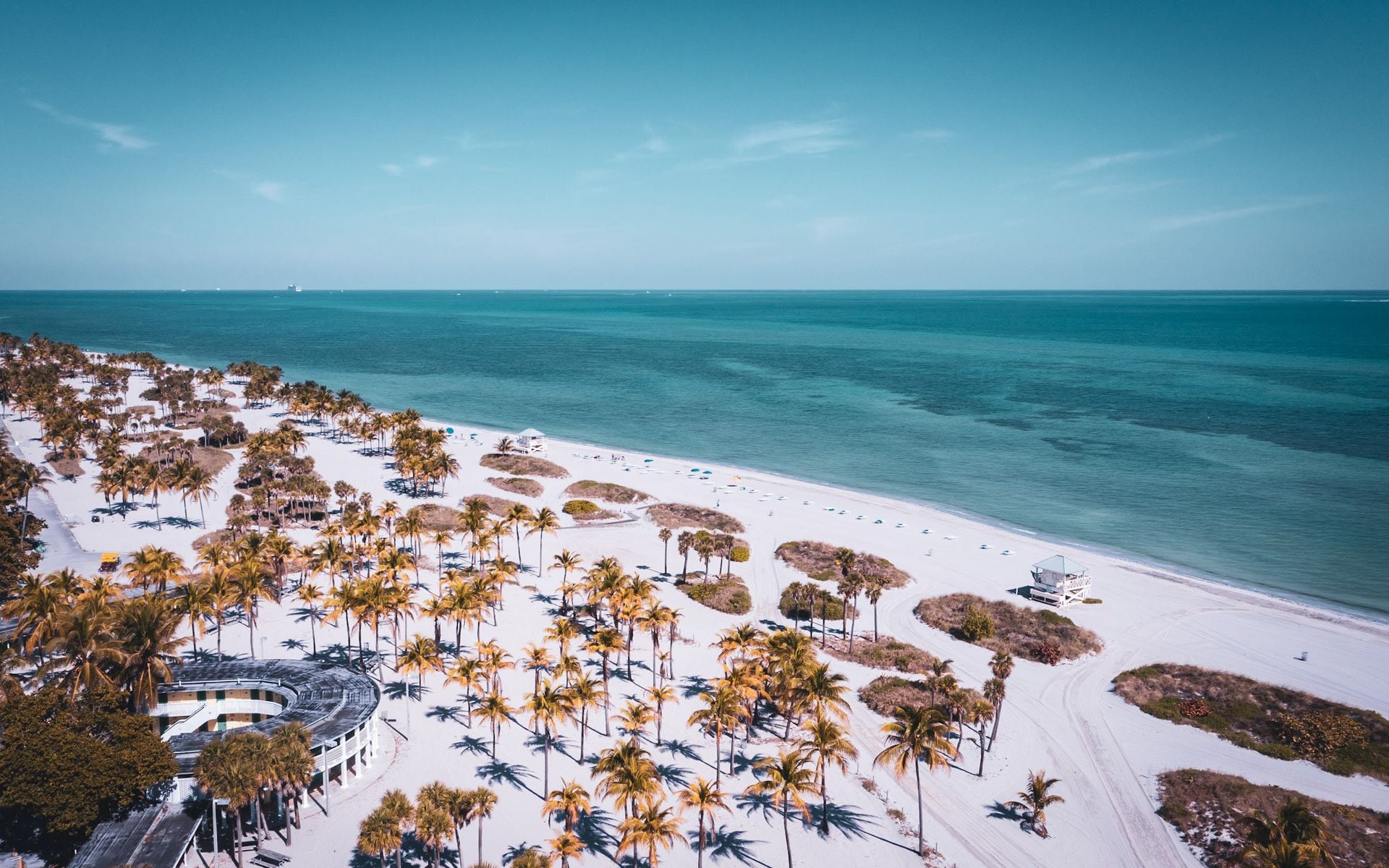
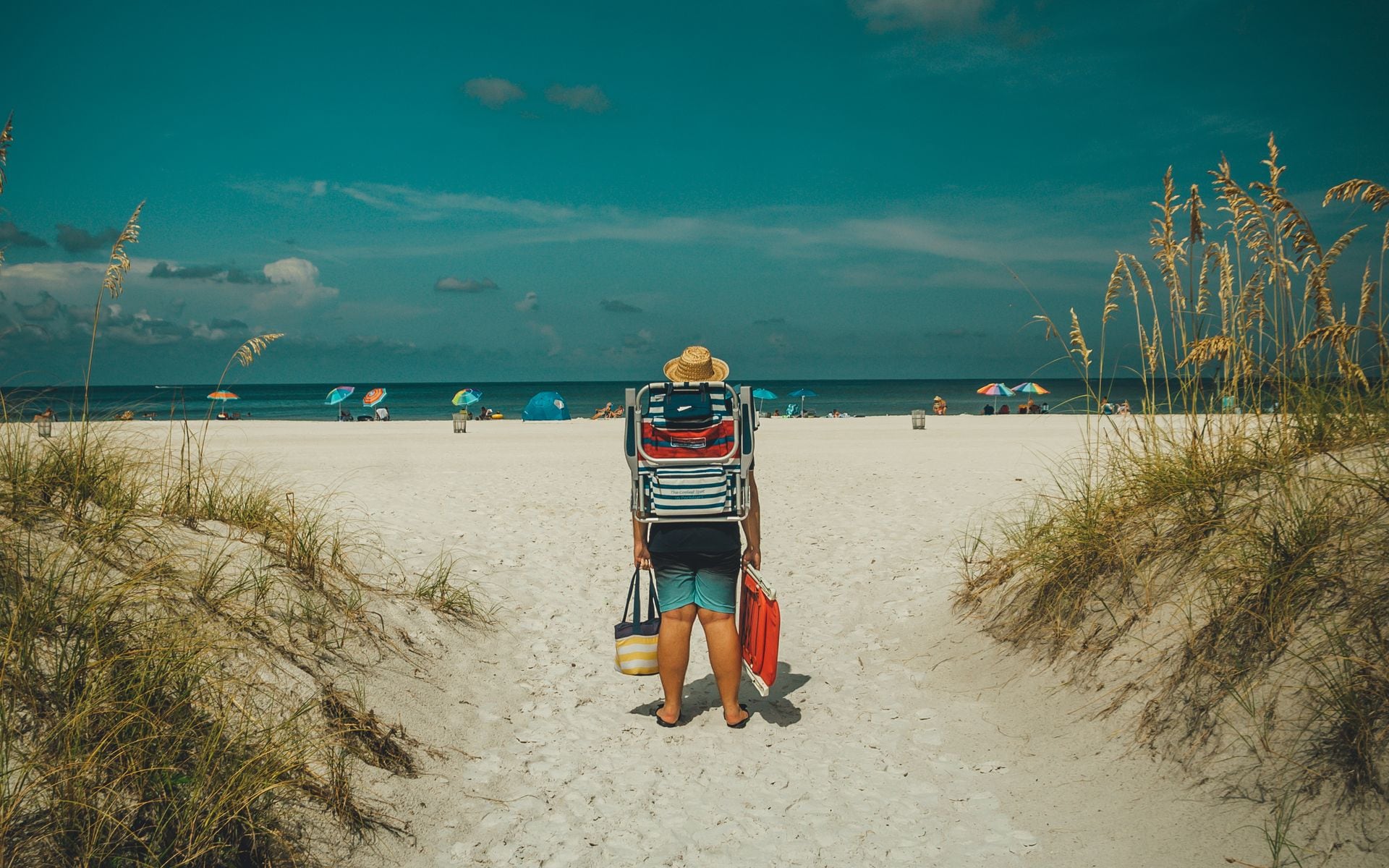
When it is beach time, the Gulf coast on the west side is the family pick. The water is calm, warm, and shallow, so toddlers can wade without getting knocked over by surf. Siesta Key near Sarasota has the softest sand in the state and stays cool underfoot even in summer, with free parking and lifeguards. Clearwater Beach sits about 30 minutes from Tampa airport and has a wide, groomed beach with a pier and easy food.
The Atlantic side has bigger waves, which older kids who want to boogie board will love but little ones will find rough. For the full rundown of which Gulf beaches suit families, see our best beaches on the Gulf Coast guide. Orlando to the nearest Atlantic beach at Cocoa is about an hour, and Orlando to the Gulf at Clearwater is about 90 minutes, so either coast is an easy day trip or overnight from the parks.
Timing the trip around Florida weather
Florida is warm year round, but the season you visit changes the whole feel of a family trip. The dry season, November through April, is the sweet spot: warm, sunny, low humidity, and no daily storms to cut a beach day short. Summer, May through October, is hot and humid with near-daily afternoon thunderstorms that usually pass in an hour but will chase you off the beach and shut down the outdoor rides.
If you can only travel in summer, plan mornings outdoors and afternoons indoors: hit the beach or the park early, break for lunch and a nap or an aquarium when the storms build, then come back out in the evening. For the full seasonal breakdown, check our guide to the best time to visit Florida. Also keep in mind that hurricane season runs June through November, and while most trips are unaffected, it is worth watching the forecast in those months.
A sample family week
Here is a shape that works for most families without wearing everyone out.
- Days 1 to 2: Orlando theme parks, one park per day, arriving at rope drop and leaving by mid-afternoon when it gets brutal.
- Day 3: Wildlife day at Wild Florida Adventure Park or a slower pool day at your resort.
- Day 4: Drive to the Gulf coast (about 90 minutes to Clearwater) and settle into a beach base.
- Days 5 to 6: Beach mornings, aquarium or dolphin cruise afternoons, ice cream nights.
- Day 7: Slow morning, drive back to the airport.
That is two park days, two beach days, a wildlife day, and enough downtime that nobody comes home needing a vacation from the vacation.
Practical family notes
Bring more sunscreen than you think you need, because the Florida sun is strong every month of the year. Pack a light rain jacket in summer for the afternoon storms. A rental car is effectively required once you leave a single theme-park or beach-resort stay, so budget for it. And keep the driving realistic: Orlando to Miami is about 3.5 hours, which is a long haul with small kids, so do not try to see both ends of the state in one week.
If the trip is going to run down to the southern tip, the Everglades National Park guide covers the airboat and wildlife stops that kids love, and if you are heading all the way to the end of the road, the Key West first-timers guide will help you decide whether the long drive is worth it with kids in the back seat.
Food that keeps kids happy
Florida makes eating out with kids easy. On the Gulf coast, casual seafood shacks and beach grills are everywhere, and most have a kids menu and a view of the water. In Orlando, Bubba Gump Shrimp Co. is the reliable theme-restaurant crowd-pleaser near the parks, loud and casual enough that nobody worries about a toddler making noise. Down in the Keys, feeding the tarpon at Robbie’s of Islamorada doubles as lunch, since there is a restaurant right on the dock.
The bigger tip: do not overbook dinners. After a full day in the heat, most kids are done by 6 p.m. Plan an early, easy dinner near your hotel rather than a reservation across town, and keep snacks and water in the car at all times. The Florida heat burns through little kids fast, and a hungry, overheated child is the fastest way to end a good day early.
Beat the heat and the storms
Heat management is the whole game with kids in Florida. The sun is strong every month, and summer adds humidity that makes it feel hotter still. Build your days around it: outdoor time in the morning, a break indoors or in the pool through the hottest part of the afternoon, then back out in the evening when it cools and the light is better anyway. This is the same rhythm the storms demand in summer, so it does double duty.
Pack for it. More sunscreen than you think, hats, and a change of clothes for the afternoon downpour in summer. Reef-safe sunscreen is a good call anywhere you are snorkeling. And keep everyone drinking water, because kids do not always notice they are dehydrated until they are already cranky.
A realistic budget
Florida with kids is not cheap, and the theme parks are the reason. A single-day, one-park Disney or Universal ticket runs roughly $110 to $190 per person depending on the date, so a family of four can spend $500 to $700 on tickets for one park day before food and parking. That is why rationing the parks to two or three days saves real money as well as sanity.
The rest of the trip can be cheap. Beaches are free or a few dollars for parking. Wildlife stops like Wild Florida Adventure Park run $30 to $40 for the airboat, and aquariums like The Florida Aquarium and Mote Marine Laboratory are in the same range with kids cheaper. A value resort like Universal’s Cabana Bay Beach Resort costs a fraction of the deluxe on-site hotels. Spend the money on one or two big park days, then let the free beach and cheap wildlife days carry the rest.
Keep the plan loose, ration the parks, and let the beach do most of the work. Florida makes the rest easy.