Blue Spring State Park is one of Florida’s most visited state parks, and for most people it is either a winter manatee trip or a summer swimming trip, rarely both. Getting more from a visit means understanding how the park shifts between those two modes, what else the park offers beyond the water, and how to handle the reservation system that fills months ahead when the manatees are in. This guide covers all of it.
The park sits in Orange City, about 45 minutes north of downtown Orlando near DeLand in Volusia County. It runs along the western bank of the St. Johns River, where the spring run empties into one of Florida’s great waterways.
Why People Come to Blue Spring State Park
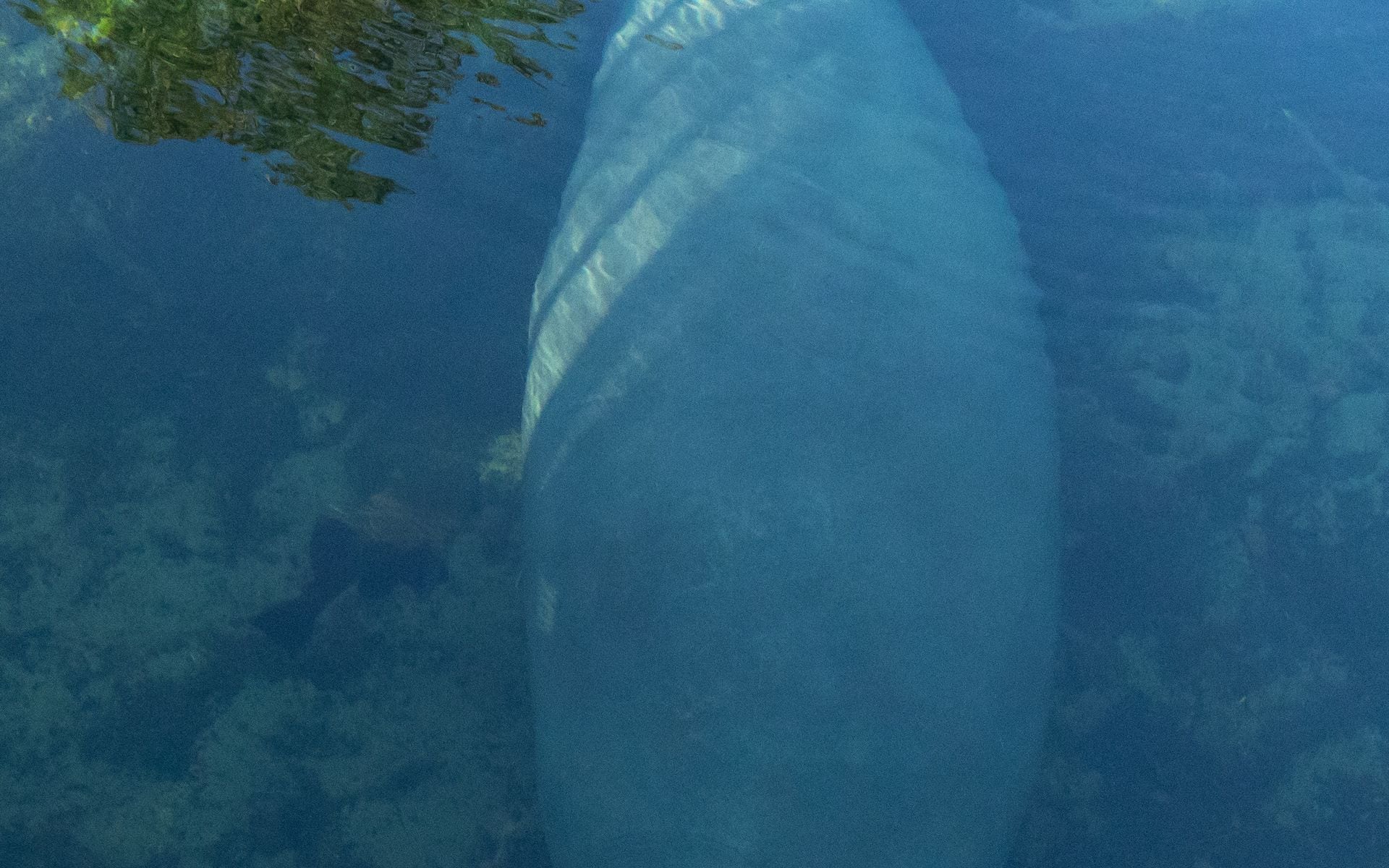
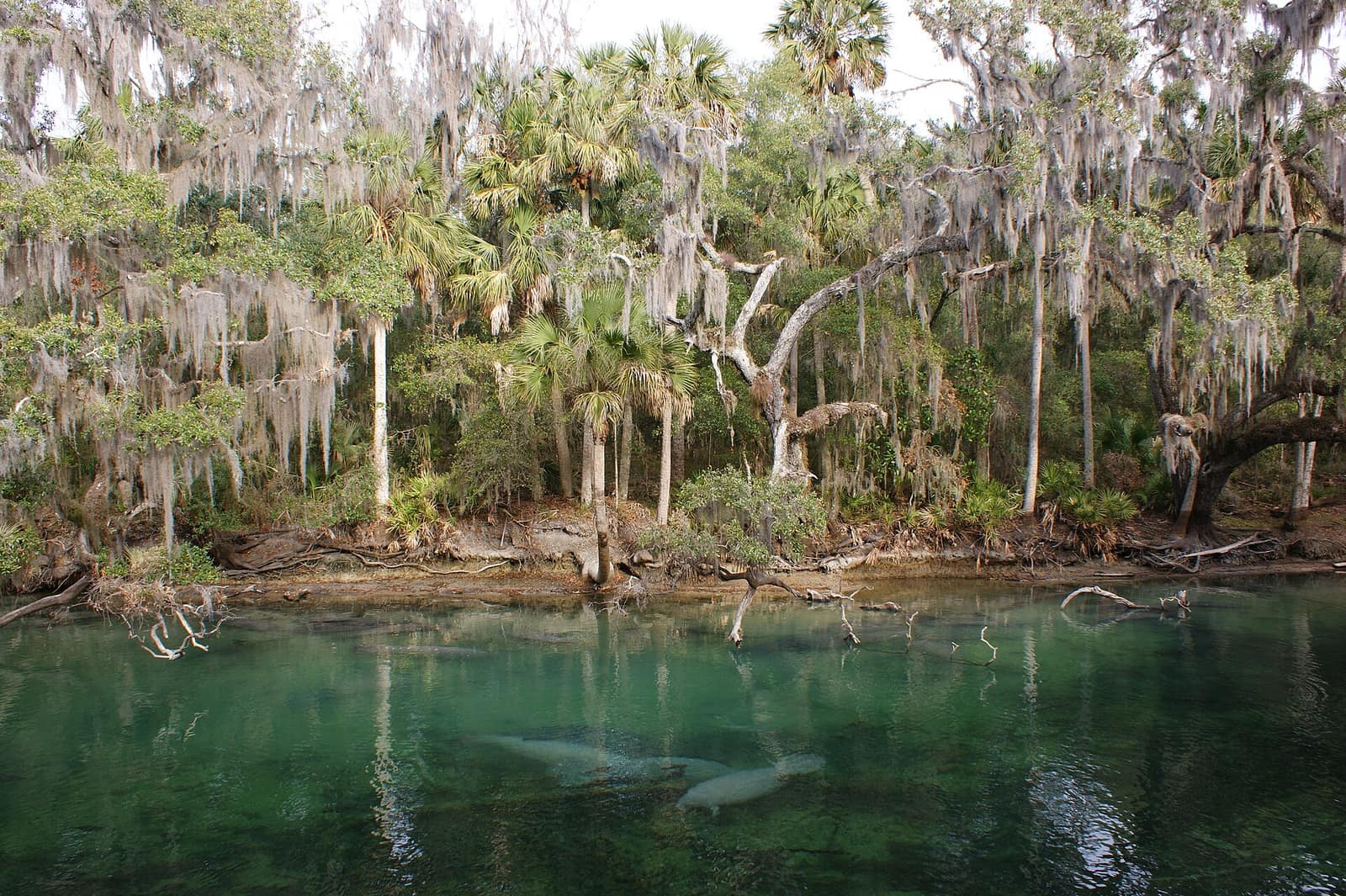
The short answer is manatees. In winter, when the St. Johns River drops below the 72-degree temperature of the spring, West Indian manatees move into the spring run to stay warm. The numbers here are some of the highest at any single site in the state. On a cold January morning after a cold front, you can stand on the boardwalk and count dozens of manatees in the clear water below, some resting motionless on the sandy bottom, some surfacing to breathe within a few feet of where you are standing.
The same spring run that fills with manatees in winter is a swimming hole and kayak run in summer. In the warm months, after the manatees have left for the river, the park opens the run to swimmers, snorkelers, and paddlers who come to cool off in the steady 72-degree water. The park is two different places depending on the season, and both versions are worth a trip.
Manatee Season: November Through March
Manatee season at Blue Spring runs roughly from mid-November through March, though the exact dates depend on water temperatures in the St. Johns River rather than the calendar. After a sustained cold spell, numbers rise. After a warm stretch, some manatees drift back to the river. The park posts daily manatee counts during the season, which is a useful way to gauge the show before you drive.
During manatee season, the spring run is closed to all water entry: no swimming, no tubing, no kayaking from the upstream entrance. The boardwalk that runs the length of the spring run stays open, and that is how most people see the manatees. The water is clear enough to see them resting several feet down, and rangers walk the boardwalk to answer questions and help people identify what they are looking at.
What makes Blue Spring exceptional for manatee viewing is the combination of a long boardwalk directly over the water and genuinely clear spring visibility. At other viewing spots in Florida, you are often watching from a distance on a bank with limited sight lines. Here, you are over the water looking straight down. See our guide to where to see manatees in Florida for how Blue Spring compares to the Crystal River swim-with options and other spots around the state.
Arrive early during manatee season. The park requires day-use reservations during peak winter weekends, and the lot fills before midday on cold and sunny days. Check the Florida State Parks reservation system at floridastateparks.org before you go, both to book and to check the current manatee count.
Swimming and Tubing the Spring Run
Once the manatees leave, typically in late March or April, the spring run opens and becomes one of the better swimming springs in Central Florida. The water holds at a constant 72 degrees, which means it feels refreshing no matter how high the summer temperature climbs. In July and August, stepping into 72-degree water when the air is 95 is the point.
The swimming area at the spring boil is the focal point, but the run itself stretches through a canopy of cypress and live oaks from the boil down to the St. Johns River. Tubing the run is popular when conditions allow. The park does not rent tubes, so bring your own if that is the plan.
Kayak and canoe rentals are available at the park during the open season. Paddling the spring run toward the river gives you a different angle on the park than the boardwalk does, and it is a calm, easy float that does not require paddling experience. The run is slow-moving and shaded for most of its length. For the wider springs scene in Florida, our best Florida springs for swimming guide covers the main options from Wekiwa near Orlando to Ichetucknee up north.
The Thursby House and the Park’s History
Blue Spring has been a tourist destination since the 1880s, when steamboats ran up the St. Johns River and stopped at the spring for tours and excursions. The Thursby House, a two-story wooden structure built in 1872 and listed on the National Register of Historic Places, still stands on the bluff above the spring run. The house was the home of the Thursby family, who ran a small citrus operation and ferry crossing here in the late 1800s. A short path from the main parking area leads to it, and it gives the park a layer of history that most spring parks do not have.
Below the house, a shell mound marks the site of Indigenous use of the spring going back thousands of years. Blue Spring was a gathering place long before the steamboat era or the Thursby family arrived.
Hiking, Birdwatching, and Wildlife
The park has about 4 miles of hiking trails through the upland habitat on the east side of the spring run. They run through flatwoods and palmetto scrub and connect to the boardwalk and the spring area. The trails are flat and easy, more nature walk than serious hike, but the birdwatching along them is good year round: great blue herons and anhingas along the water, osprey overhead, sandhill cranes in the open upland sections, and migratory warblers moving through in spring and fall.
Alligators are present in the river edges and the slower reaches of the spring run. They are not an unusual sight from the boardwalk or from a canoe. Give them distance, keep children close to the swimming zone, and do not approach any gator near the water’s edge. Standard Florida wildlife rules apply. Other wildlife visible from the boardwalk and the trails includes white-tailed deer, gopher tortoises in the sandy upland sections, and the river otters that occasionally work the spring run.
For manatee and wildlife tours elsewhere in Florida, our manatee and wildlife tours guide covers the main options.
Camping and Cabins
Blue Spring has full campground facilities, including both tent sites and full-hookup RV sites with electricity and water. The campground is in a wooded area a short walk from the spring run. The real prize, though, is the set of historic housekeeping cabins along the St. Johns River. The cabins are fully equipped for a multi-night stay and have a river view that makes them some of the more distinctive accommodations at any Florida state park.
The cabins book far in advance. During manatee season, winter dates sell out as early as the Florida State Parks system allows reservations, which is typically 11 months ahead of arrival. If a winter cabin stay is the goal, that booking window is the constraint to plan around. Summer dates are more available but still worth reserving early on weekends. Book through the Florida State Parks reservations system at floridastateparks.org.
Fees, Reservations, and Practical Notes
Entry fees at Blue Spring follow the standard Florida State Parks structure: a per-vehicle day-use fee, with lower rates for pedestrians and cyclists. Current fees are listed at floridastateparks.org. Florida State Parks Annual Passes cover Blue Spring and every other state park in the system, which is worth the cost if you plan to visit more than a couple of parks in a year.
Day-use reservations are required during peak winter weekends in manatee season. Outside of those peak dates, reservations may not be required, but the lot still fills early on cold days when manatee numbers are high. The park opens at 8 a.m. and closes at sunset daily. The boardwalk is staffed during manatee season, and rangers can point you to where the manatees are congregating.
The park has no food concessions, so bring water and snacks, especially in summer when the heat comes on fast after the morning cool. Water shoes are useful for the limestone edges of the spring.
Best Time to Visit
The answer depends on what you want from the trip.
For manatees: November through March, with December through February being the peak. Numbers are highest after cold fronts, when river temperatures drop and manatees crowd into the warm spring in larger groups. The park’s daily manatee count is worth checking online the morning you plan to visit.
For swimming: Late March through September. Summer is the busiest time for the swimming crowd, but the 72-degree water makes it genuinely worth the drive even in the peak heat. Weekday mornings in May and June are often the quietest times at the spring run.
For a quieter visit overall: Weekday mornings in April or early May are a good middle ground. The run is open for swimming, the crowds are lighter than summer weekends, and the park is green from the spring rains.
For the bigger picture of when to be in Florida, the best time to visit Florida guide breaks down the dry and wet seasons, the hurricane window, and how the timing plays out across the whole state.
Getting There and Where to Stay Nearby
Blue Spring State Park is at 2100 W. French Avenue, Orange City, FL 32763. From Orlando, take I-4 west to exit 114 (DeLand/Orange City) and head north on US-17/92, then follow signs to the park. The drive is about 45 minutes from downtown Orlando and about 55 minutes from the theme-park district.
From Daytona Beach, head west on I-4; the park is about 35 minutes away. From Jacksonville, allow about 90 minutes south on I-95 and then west toward DeLand. From St. Augustine, the drive is about 75 minutes via SR-207 and I-4.
Nearby hotels are in Orange City, DeLand, and along the US-17/92 corridor. DeLand, about 10 minutes north of the park, is a small college town with a walkable downtown and a handful of independent restaurants and cafes, which makes it a reasonable base if you want a night or two near the park. Daytona Beach is about 30 minutes east if you want something on the coast to pair with the spring visit.