Manatees are the reason a lot of people fall in love with wild Florida. They are big, slow, gentle plant-eaters that gather by the hundreds in the state’s warm springs every winter, and Florida is one of the only places on earth where you can reliably watch them, and in one spot legally swim near them. The trick is knowing where and when. Manatees follow the water temperature, so timing your trip to the season matters as much as picking the right spot. Here is where to see manatees in Florida and how to do it right.
When to go: the season is everything
Manatees cannot handle cold water. When the Gulf and the rivers drop below about 68 degrees in winter, they crowd into the freshwater springs, which stay a steady 72 degrees year round. That is the show. Peak manatee season runs from roughly mid-November through March, and the coldest snaps produce the biggest gatherings, because a cold front pushes even more of them into the warm springs. Summer manatee sightings happen, but they are scattered. If seeing manatees is a main goal of your trip, plan for the winter dry season and watch for a cold front. For the wider seasonal picture, see the best time to visit Florida.
| Spot | Region | What you can do | Best window |
|---|---|---|---|
| Crystal River | Nature Coast | Swim with manatees (guided) | Nov to Mar |
| Homosassa Springs | Nature Coast | Guaranteed viewing, wildlife park | Year round |
| Blue Spring | Central | Boardwalk viewing (no swimming) | Nov to Mar |
| Manatee Springs | North | Spring and boardwalk | Winter |
| TECO Manatee Center | Tampa Bay | Free viewing at power plant | Cold snaps |
Crystal River: the only legal swim-with-manatees spot
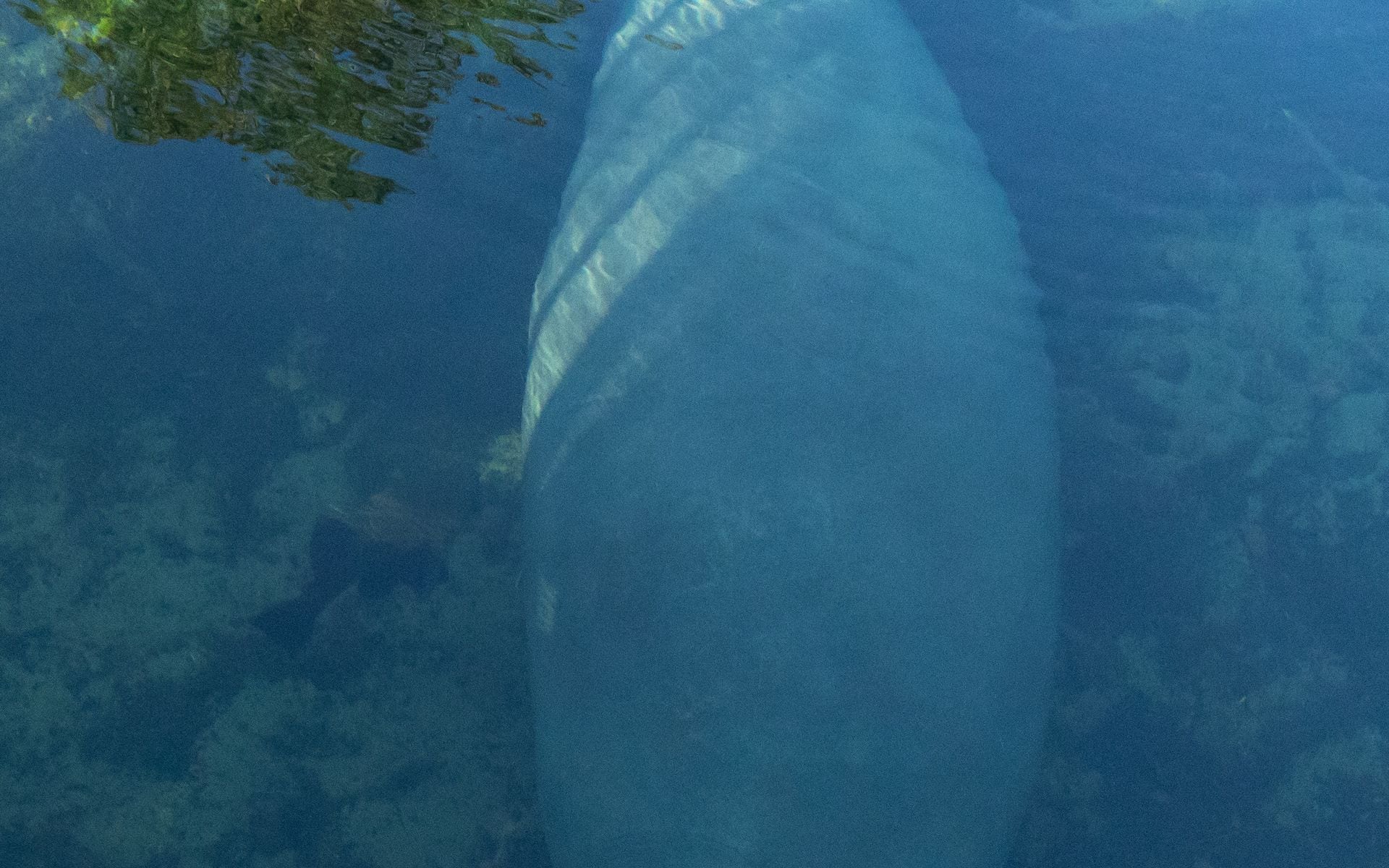
Crystal River on the Nature Coast, about 90 minutes north of Tampa, is the headline. It is the only place in the United States where you can legally get in the water and snorkel near wild manatees, under strict rules. In winter, hundreds gather in the warm springs of Kings Bay, and licensed operators run small-group tours. Bird’s Underwater Manatee Dive Center is one of the long-running local outfitters, and a guided tour is the right way to do it: they brief you on the passive-observation rules, provide gear and often wetsuits (the 72-degree water is chilly), and put you in the right coves. You float and watch. You do not chase, ride, or grab. Book ahead for cold-weather mornings, because the good winter days fill fast. Read more on the region in our Crystal River and the Nature Coast guide.
Homosassa Springs: guaranteed viewing
Just south of Crystal River, Homosassa Springs Wildlife State Park is the “we drove all this way and I need to see one” insurance. The park keeps rescued manatees and has an underwater observatory where you can watch them at eye level any day of the year, weather or no cold front. You cannot swim here, but for families or anyone visiting outside peak season, it is the surest sighting in Florida and a solid half day with the other rescued wildlife on site.
Blue Spring: the best boardwalk views
Over on the central side near Orange City, Blue Spring State Park is the best free-ish manatee viewing in the state. When the St. Johns River turns cold, hundreds of manatees pack into the warm spring run, and a boardwalk lets you look straight down at them stacked in the clear water. The park closes the swimming area to people while the manatees are in, from roughly mid-November through March, so this is a watch-not-swim spot in season. On a cold January morning the numbers here are hard to beat. It doubles as one of the best Florida springs for swimming in the warm months once the manatees move on.
Tampa Bay and other winter spots
Manatees also gather at warm-water outflows near power plants in the Tampa Bay area during cold snaps, where free viewing centers set up boardwalks. Farther north, Manatee Springs State Park near the Suwannee River draws them in winter too. These are weather-dependent: no cold front, fewer manatees. The rule holds everywhere. Cold air means crowded springs.
How to watch responsibly
Manatees are protected, and the rules exist because they are easy to harm. Wherever you go:
- Passive observation only. Let the manatee come to you. Do not chase, corner, poke, ride, or feed them.
- Use a licensed guide in Crystal River. They know the rules and the coves, and doing it solo risks a fine.
- Keep your distance from mothers and calves.
- Do not disturb resting manatees. If one is on the bottom, leave it be.
- In your own boat, obey the slow-speed manatee zones. Prop strikes are a leading cause of injury.
What a Crystal River swim tour is like
If you book the guided swim at Crystal River, here is the shape of the morning. Tours leave early, often before sunrise in peak winter, because the manatees are calmest and the boat traffic lightest at dawn. You get a wetsuit (the 72-degree water feels cold when the air is in the 40s or 50s on a January morning), a mask and snorkel, and a briefing on the passive-observation rules. The captain runs a small boat out to the coves in Kings Bay where manatees rest, and you slip into the water quietly and float. The manatees are curious and sometimes approach on their own, which is the only kind of contact allowed. A good outfitter like Bird’s Underwater Manatee Dive Center keeps groups small and keeps you off the animals. Trips run two to three hours, and the cold, early start is worth it for a clear-water encounter with a wild animal the size of a couch.
Manatees beyond the springs
Not every manatee sighting requires a spring. In the warmer months, manatees spread out into the rivers, bays, and coastal shallows all over the state, and paddlers routinely see them from a kayak or paddleboard. The Nature Coast, the Indian River Lagoon on the Atlantic side, and the flats around Tampa Bay and the Everglades all hold manatees in summer, just not in the concentrated winter herds. If you are on the water anywhere in Florida from spring through fall, keep an eye out for the tell-tale “footprint” swirl on the surface and the gray back rolling up for a breath. Boaters should always obey posted slow-speed manatee zones, since prop strikes are a leading cause of manatee injury and death.
Seeing manatees from a kayak
Not everyone wants to get in 72-degree water at dawn, and you do not have to. Paddling is the calm, dry, low-cost way to watch manatees, and it works in more of the state and more of the year than the winter swim tours. In Crystal River and the neighboring Homosassa and Chassahowitzka rivers, you can rent a kayak or paddleboard and drift the clear runs where manatees rest, keeping the required distance and letting them surface around you on their own. The same passive-observation rules apply from a boat as from the water: no chasing, no touching, no feeding, and stay well off mothers with calves. The advantage of a kayak is that you cover more water and see manatees moving between the springs and the flats rather than just packed into one cove.
In the warmer months the paddling window opens up statewide. The Indian River Lagoon on the Atlantic side, the flats around Tampa Bay, and the mangrove creeks of the Everglades and Ten Thousand Islands all hold manatees from spring through fall, and a quiet paddle is often the best way to find them once they leave the winter springs. Guided clear-kayak and eco-tour operators run trips on most of these waters, which is the easy option if you do not want to sort out your own boat and launch. Whichever water you paddle, obey the posted slow-speed manatee zones if you are ever in a powerboat, since prop strikes remain a leading cause of manatee injury and death.
A paddle also stretches the season past the winter crowds. The concentrated herds only pack the springs from mid-November through March, but a manatee cruising a warm-month river is a common sight if you know what to look for: a rounded gray back rolling up for a breath, a snout breaking the surface, or the flat “footprint” swirl a manatee leaves as it fans its tail. Go slow, stay quiet, and let the animal set the distance. That patience is the whole difference between a good sighting and spooking one off, and it costs nothing but the price of a rental board or an easy guided tour.
Fit it into your trip
A manatee day pairs well with the springs and the Gulf beaches, since Crystal River and Homosassa sit on the Nature Coast between Tampa and the Big Bend. It is also one of the cheaper wildlife experiences in the state, a guided swim costing far less than a theme-park day, which makes it a good value stop if you are watching the budget covered in is Florida expensive to visit. Time it for winter, book a Crystal River tour ahead, and start planning the rest from the Florida travel guide.