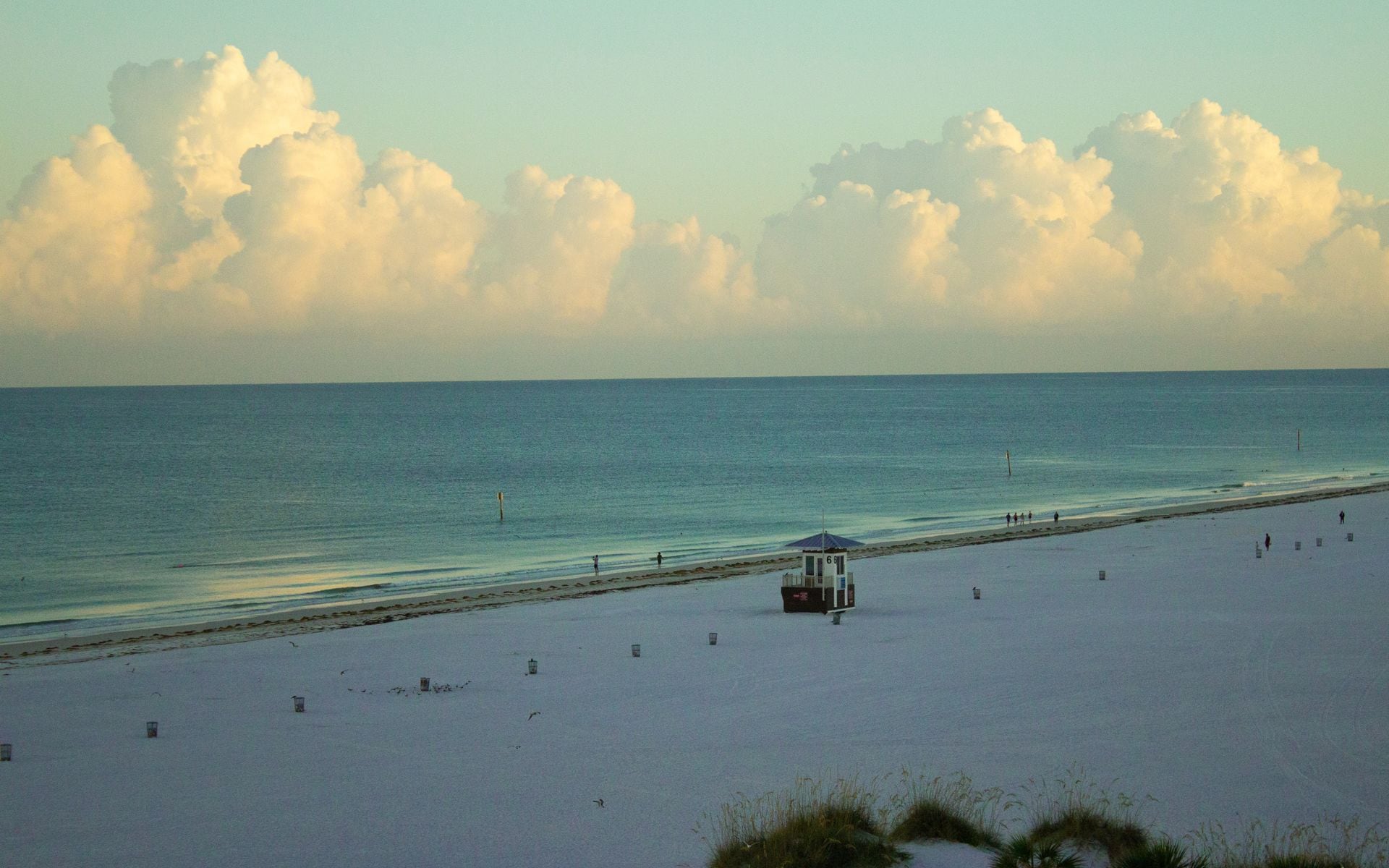
The best time to visit Florida beaches depends entirely on what you are optimizing for. Warm water and low humidity do not come in the same month. Cheap rooms and calm surf do not either. Florida is warm year round and splits into two seasons more than four, so the real question is which tradeoff you want. This is a month-by-month breakdown for both coasts so you can pick your window with clear eyes.
Use this alongside the broader best time to visit Florida guide and the main Florida Travel Guide to plan the rest of the trip.
The two-season reality
Forget four seasons. Florida has a dry season and a wet season. The dry season, roughly November through April, is warm, sunny, low in humidity, and free of daily storms. It is the peak travel window and the best weather, but it is also the most crowded and expensive. Winter cold fronts can occasionally drop water temperatures and cancel boats for a day, especially in the north.
The wet season, May through October, is hot and humid with near-daily afternoon thunderstorms that build in the heat and usually pass within an hour. Rooms are cheaper, crowds thinner, water warm, and on the calm spells the Gulf runs its clearest. It also overlaps with hurricane season, which runs June through November and peaks August through October.
The other split is north versus south. South Florida and the Keys are tropical and stay warm all winter. The Panhandle and North Florida are cooler in winter, with chilly nights and water temperatures that dip into the 60s, so a January beach day in Destin is very different from one in Key West.
Month by month
| Month | Weather | Water | Crowds | Best for |
|---|---|---|---|---|
| January | Cool north, warm south | Cold north, mild south | High (winter escape) | Snowbirds, south Florida, Keys |
| February | Mild, dry, sunny | Warming south | High | Warm-weather escape, low humidity |
| March | Warm, dry, breezy | Comfortable south, cool north | Very high (spring break) | Spring break energy, or avoid it |
| April | Warm, dry | Warming both coasts | High early, easing late | Best all-around weather window |
| May | Hot, storms starting | Warm | Moderate | Warm water before summer crowds |
| June | Hot, humid, daily storms | Warm | Moderate | Low hurricane risk, cheaper rooms |
| July | Hot, humid, daily storms | Warmest | High (families) | Warm water, morning beach days |
| August | Hot, humid, storm peak building | Warmest | High early | Cheap late-month, watch forecast |
| September | Hot, hurricane peak | Warm | Low | Cheapest rooms, thinnest crowds |
| October | Warm, storms easing | Warm | Low to moderate | Quiet shoulder, warm water |
| November | Warm, drying out | Cooling north | Moderate | Great weather, season winding down |
| December | Cool north, warm south | Cool north, mild south | High (holidays) | Holiday escape, south and Keys |
The best all-around window
If you want one answer: late March into early May is the sweet spot on both coasts. The humidity is still low, the daily storms have not started, the water has warmed up from the winter, and the spring-break peak eases off by mid-April. You get near-perfect beach weather without the full winter crowd or the summer storms. The tradeoff is that it is not the cheapest time, since it sits at the tail of the peak season.
For warm water specifically, summer wins. July and August put Gulf and Atlantic water into the mid-80s, bath-warm and perfect for long swims, as long as you plan around the afternoon storms by hitting the beach early. For the softest sand and calmest water to pair with that, see our guide to the best beaches on the Gulf Coast.
The cheapest window
September is the cheapest and quietest month on the Florida coast, full stop. Rooms drop, beaches empty out, and the water is still warm. The catch is that it is the peak of hurricane season, so it is a real gamble. If you go in September or October, buy travel insurance early and keep your bookings flexible. Our Florida hurricane season guide covers exactly how to plan around that risk so a cheap trip does not turn into a lost one.
Picking your coast by season
The Gulf coast on the west runs calmer and warmer, with the white quartz beaches of Siesta Key, Clearwater, Destin, and Naples. It is the better pick most of the year for wading, families, and clear water. The Atlantic side has bigger surf, which surfers and boogie-boarders want but little kids find rough.
In winter, favor the south. The Keys and south Florida stay warm when the Panhandle turns chilly, so a January beach trip should point at Key West or Naples rather than Destin. In summer, both coasts are warm, so pick based on the surf you want. In the shoulder months of April, May, October, and November, the whole state is in play.
Getting between the beaches
Florida’s beaches are spread out, so a rental car is effectively required to move between them. Orlando to the nearest Atlantic beach at Cocoa is about an hour, Tampa to Siesta Key is about an hour, and the Panhandle is its own trip a full day’s drive from the south. Plan a single stretch of coast rather than trying to hit both ends in one week. The renting a car in Florida guide covers the logistics, tolls, and airport pickups, and the best Florida road trips guide maps out how to string several beaches together if that is your goal.
Water temperature by season
Water temperature is the detail people forget, and it changes the whole beach experience, especially in winter. In the peak dry season of December through February, south Florida and the Keys keep water in the low-to-mid 70s, warm enough to swim comfortably. But the Panhandle and North Florida can drop into the low 60s or colder after a winter cold front, which is refreshing at best and too cold for a long swim at worst. This is why a January beach trip should point south to Naples or the Keys, not north to Destin.
By late spring, both coasts warm into the high 70s, and summer pushes them to the mid-80s, bath-warm and perfect for long swims. Water stays warm well into the fall, so October beaches are often still swimmable even as the air cools. If warm water is your top priority, June through September delivers it on both coasts, with the tradeoff of the afternoon storms and the hurricane-season watch.
Crowds and pricing rhythm
The crowd calendar matters as much as the weather. The winter dry season is peak everywhere, with prices highest and beaches busiest from the holidays through spring break. March is the spring-break crush, when college crowds and families overlap and coastal towns fill up, so if you want a quiet beach, avoid the middle two weeks of March or head to a quieter stretch like Naples or the barrier islands off St. Petersburg where resorts like the Island Grand at TradeWinds spread the crowd out.
Summer is family season, busy but not as pricey as winter peak, and the shoulder months of May, September, October, and November are the value windows. September is the single cheapest and quietest month on the coast, with warm water and thin crowds, offset by peak hurricane risk. If you can stay flexible and buy insurance, it is the best deal on the calendar.
Matching the month to the trip
Put it together and the choice gets simple. Want the best all-around weather with manageable crowds? Aim for April or late October into November. Chasing warm water and cheap rooms, and willing to plan around storms? June or September. Escaping winter up north? December through March in south Florida and the Keys, where the water stays warm. Traveling with little kids who need calm, shallow water? Any month works on the Gulf coast, covered in our best beaches on the Gulf Coast guide, but the shoulder months give you the easiest mix of warm water and space on the sand.
Whatever month you land on, plan your beach days around the sun and the summer storms: mornings and late afternoons are the best light and the safest conditions, and midday in summer is when the heat and lightning build. Bring sun protection year round, because the Florida sun is strong every month.
A quick reference by traveler type
Different travelers want different months, so here is the short version. Snowbirds and winter-escape travelers should aim for January through March in south Florida and the Keys, where the water stays warm while the north is cool. Families chasing warm water and school breaks get July and August, with beach mornings and storm-hour afternoons. Budget travelers should look at September and October, the cheapest and quietest window, paired with early travel insurance. Anyone who just wants the best all-around weather should book April or November, the shoulder sweet spots.
The one constant across all of them is to plan the day around the sun and the summer storms, and to pack sun protection no matter the month. Get to the sand early, take a break from the midday heat, and come back for the evening light, which is the best of the day anyway.
Pick your priority first: warm water, low crowds, or low prices. Once you know which one you are chasing, the calendar tells you exactly when to go.