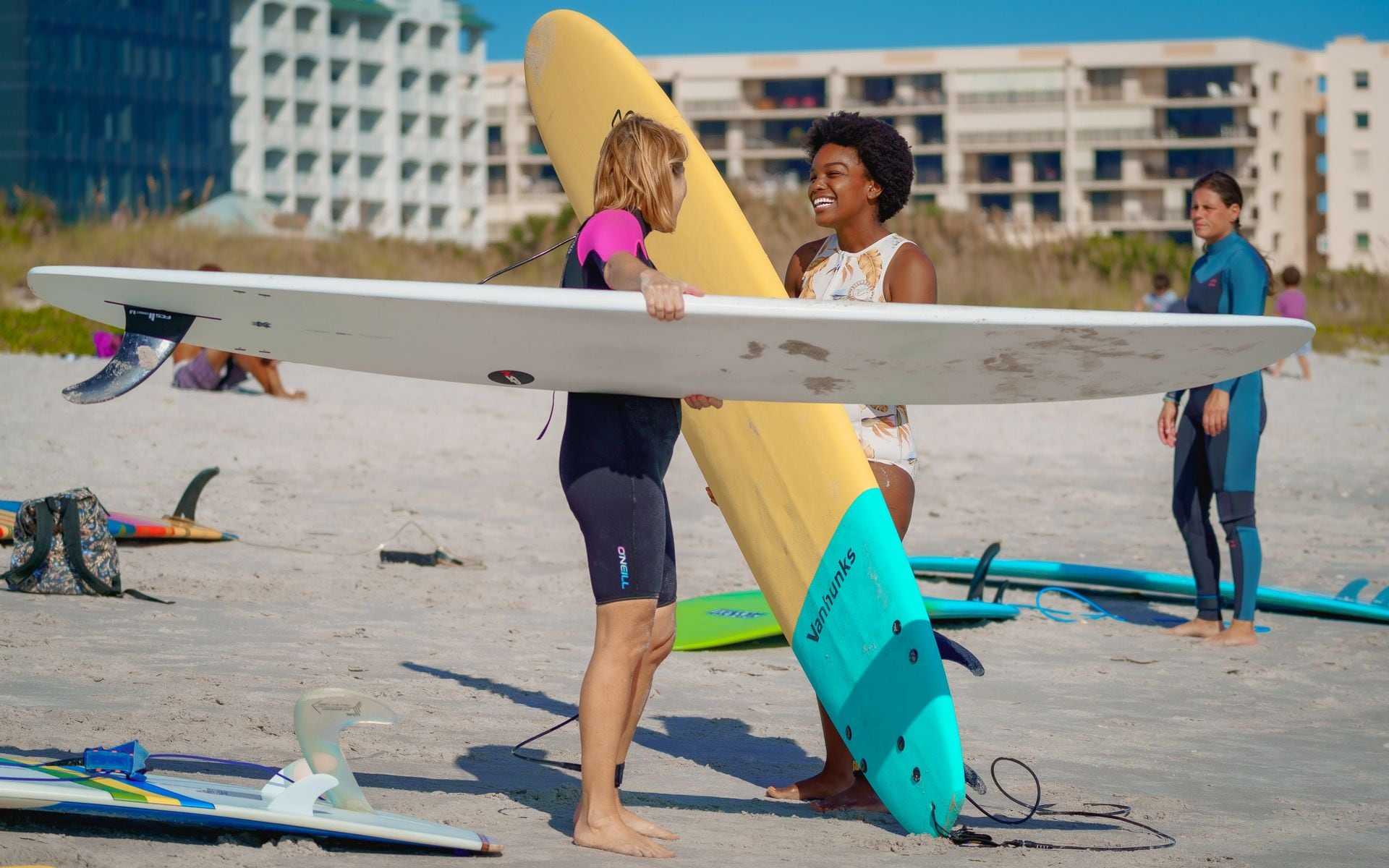
The best surf breaks
Florida's surf lives on the Atlantic coast, since the Gulf side stays too calm to break most days. Cocoa Beach on the Space Coast is the heart of it, the home break of 11-time world champion Kelly Slater and the site of the original Ron Jon Surf Shop, which runs 24 hours. The waves here are usually small and beginner-friendly, and the beach sits about an hour east of Orlando, making it the default surf stop on a theme-park trip.
For the best waves in the state, Sebastian Inlet about an hour south of Cocoa is the standout, where a jetty focuses the swell into the cleanest, most consistent break on the coast. New Smyrna Beach near Daytona is another reliable spot with a relaxed scene, and up north the Jacksonville-area beaches pick up winter swell. These breaks pair naturally with the beach days in our best beaches in Florida guide.
When the waves show up
Florida is not a big-wave destination, and that is part of the appeal for learners. The most consistent surf comes from two sources: winter cold fronts, roughly November through March, which send groundswell and the biggest clean days, and hurricane season, June through November, when distant storms push in the largest swells of the year. Summer between systems is often flat and glassy, better for a longboard cruise than a serious session.
Water stays warm enough to surf in boardshorts May through October, and a light wetsuit or spring suit handles the cooler winter water in the 60s. Morning is best before the sea breeze picks up and chops the surf.
| Break | Near | Level | Best swell |
|---|---|---|---|
| Cocoa Beach | Orlando | Beginner | Winter fronts |
| Sebastian Inlet | Melbourne | All levels | Fronts and hurricanes |
| New Smyrna Beach | Daytona | Beginner to intermediate | Year round |
| Jacksonville Beach | Jacksonville | Intermediate | Winter swell |
Lessons, rentals, and safety
Cocoa Beach is the easiest place to learn, with several surf schools running group and private lessons for about $50 to $90 per person, boards included. Rentals run roughly $25 to $40 a day. The gentle beach break and shallow sandbars make it forgiving for first-timers, and the warm water means no thick wetsuit to fight.
Respect the beach flag warnings and rip currents, which are the real hazard on the Atlantic coast: a single red flag means high hazard, a double red means the water is closed. Get out of the water when lightning builds in summer, and watch for other surfers in crowded lineups. Sightseeing and dolphin cruises run from the same coast, covered in our boating and sunset cruises guide, and the region's boat operators are listed in the tours and boat trips directory.
Building surf into a Florida trip
Because the Space Coast breaks sit about an hour from Orlando, surfing slots neatly into a park trip, covered in our theme parks guide. You can knock out a morning session at Cocoa Beach and be back for an afternoon in the parks, or the reverse.
For a longer coastal run, thread the surf towns together on a northbound drive from Cocoa through New Smyrna to Jacksonville, or head south toward the reef and calmer water covered in our snorkeling and diving guide when the surf goes flat.
Gear, forecasts, and etiquette
Check a surf forecast before you drive, since Florida surf turns on and off with the weather: look for a swell of two feet or more and light offshore or calm wind for the cleanest waves. A beginner does best on a soft-top longboard, which most surf shops rent for about $25 to $40 a day, while shortboards suit the punchier days at Sebastian Inlet. The warm water means boardshorts May through October and a light wetsuit for the cooler winter mornings.
Line-up etiquette matters even in mellow Florida surf: do not drop in on a surfer already riding a wave, wait your turn, and give beginners room. Watch the beach flags and rip currents, get out when lightning builds, and never surf alone at an unfamiliar break. Cocoa Beach is reachable through Orlando (MCO) about an hour away, making it the easiest surf base. When the surf goes flat, the calm-water options in our beaches guide fill the day.
Frequently asked questions
Where is the best surfing in Florida?
The Atlantic coast, with Cocoa Beach as the best-known spot and Sebastian Inlet as the most consistent, cleanest break in the state. New Smyrna Beach and the Jacksonville-area beaches round out the top breaks.
When is the best time to surf in Florida?
Winter cold fronts from November through March bring the cleanest groundswell, and hurricane season from June through November pushes in the biggest waves. Summer between systems is often flat, better for longboarding than serious surf.
Can beginners surf in Florida?
Yes. Florida's small, mellow beach breaks are ideal for learning, especially Cocoa Beach and New Smyrna. Surf schools run lessons for about $50 to $90 with a board included, and the warm water means no heavy wetsuit.
Is the water warm enough to surf year round in Florida?
Mostly. Water stays warm enough for boardshorts May through October. In winter it can drop into the 60s, so a light wetsuit or spring suit keeps you comfortable on the cooler days.
Where can you take a surf lesson in Florida?
Cocoa Beach on the Space Coast is the easiest place to learn, with several surf schools running group and private lessons for about $50 to $90 per person, boards included. The gentle beach break and shallow sandbars are forgiving for first-timers, and the warm water means no thick wetsuit to fight. Book a morning lesson before the sea breeze picks up and chops the surf.