Jacksonville is Florida’s biggest city by area, larger than New York City by the square-mile count, and it sits at the spot where the St. Johns River meets the Atlantic coast. Most visitors to Florida fly through Jacksonville International Airport and keep driving south toward Orlando or the Keys, which means the city stays mostly clear of the resort crowds that define the rest of the state. That changes when you spend a day or two looking around. Jacksonville things to see range from a serious art museum on the riverbank to 26 miles of Atlantic beach, a national historical park where the French planted a settlement in 1564, and neighborhoods of craftsman bungalows with good independent restaurants. It is not a place that packages itself for tourists, and that is exactly what makes it worth your time.
The St. Johns River and the Downtown Riverwalk
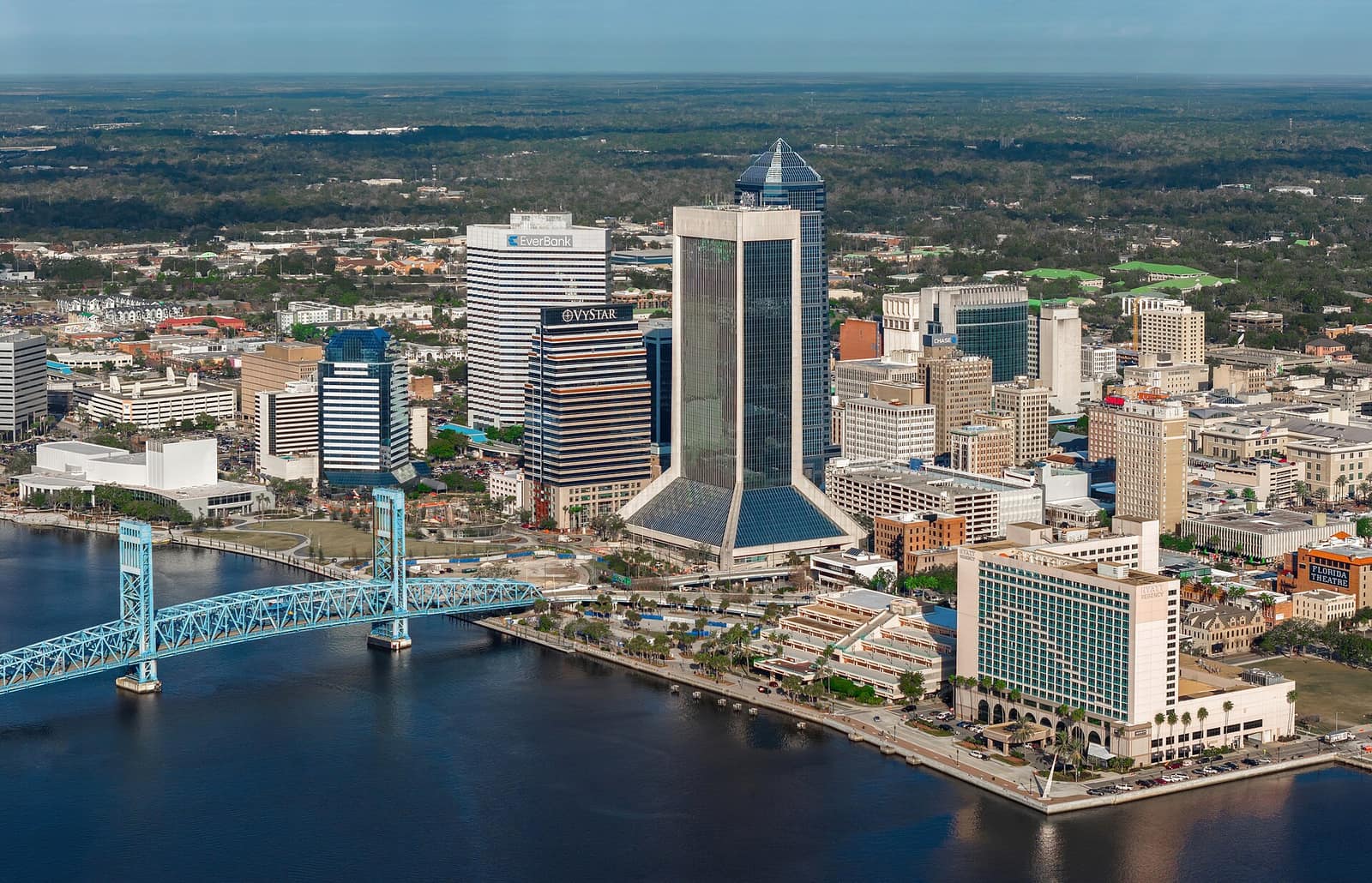
The St. Johns River is the center of Jacksonville and the most direct way to understand the city’s scale. It is wide enough to look like a bay in places, and the downtown sits right on its south bank with the blue Main Street Bridge crossing overhead. The Southbank Riverwalk runs about a mile along the water, past the Museum of Science and History (MOSH), the Friendship Fountain, and the restaurants and bars of the Southbank district. It is a good first stop to orient yourself and get your bearings on the water.
From the Riverwalk, you can catch the water taxi to the Northbank and walk the Northbank Riverwalk, which leads to Hemming Park, the oldest public park in Florida, and the cluster of museums and galleries in the downtown arts district. The round trip by water taxi takes about 15 minutes each way, and the fare is a few dollars per person. The Riverwalk areas are free to walk and most comfortable in the morning before the heat peaks.
Jacksonville Beach and the Atlantic Coast
About 15 miles east of downtown, Jacksonville Beach is a working beach town rather than a resort strip. The beach runs straight and wide, the pier at Jax Beach stretches into the Atlantic at Beach Boulevard, and the surf is consistent enough that you will see shortboarders in the water on most days. Beach access is free at the public stretches, and the town center along Beach Boulevard has bars, fish shacks, and the kind of outdoor showers that signal people swim here every day of the year.
The entire Duval County beach area runs roughly 26 miles, broken into the neighborhoods of Jacksonville Beach, Neptune Beach, Atlantic Beach, and Ponte Vedra Beach to the south. Atlantic Beach and Neptune Beach are quieter and more residential, and Ponte Vedra has the upscale resorts. If you want a straight beach day without the theme-park crowds or the long Gulf drive, this stretch of the Atlantic delivers. Water temperatures are warmest August through October, coolest January through March, and the surf picks up in fall when Atlantic systems push north.
The Cummer Museum of Art and Gardens
The Cummer Museum of Art and Gardens sits on the St. Johns River in the Riverside neighborhood, and it is the kind of museum that surprises visitors who assumed Jacksonville had none. The permanent collection runs from ancient Greek pieces through Old Masters and European decorative arts, and the American wing includes a strong collection of early 20th-century work. The Japanese Ware collection is one of the most significant in the Southeast.
The formal gardens along the river are the other reason to go. The English Garden and the Italian Garden run down to the water with views of the river and the bridge, and they were designed in the early 1900s by Ellen Biddle Shipman, one of the most important American landscape architects of the era. Admission runs around $15 for adults, and the museum closes Mondays. The Riverside neighborhood around it is worth a slow walk before or after.
Fort Caroline and the Timucuan Preserve
Most travelers drive past the intersection of I-95 and I-10 without realizing that one of the most significant early European settlements in North America sits 13 miles east of it. Fort Caroline National Memorial is part of the Timucuan Ecological and Historic Preserve, and it marks the site where French Huguenots built a fort in 1564, the first non-Spanish European settlement attempt in what would become the continental United States.
The reconstructed fort is not large, but the grounds sit inside the Timucuan preserve, which also includes the Theodore Roosevelt Area, a 600-acre section of upland forest and saltmarsh that few people outside Jacksonville know. The birding here is good year round, and the hiking trails through the maritime hammock feel nothing like the Florida most visitors picture. The preserve visitor center covers the full history, including the Spanish attack that ended the French colony in 1565, and admission is free.
Riverside and San Marco: The Neighborhoods
Jacksonville’s two most walkable neighborhoods are worth half a day each. Riverside sits just west of downtown along the river, defined by tree-lined streets, late-Victorian and craftsman architecture, and Five Points, the corner of Lomax, Park, and Margaret Streets where independent restaurants, record shops, and coffee bars concentrate. Park Street heading west from Five Points has some of the best restaurant density in the city.
Across the river, the San Marco neighborhood centers on Balis Park (San Marco Square), a small plaza with a fountain and the lion sculptures that gave the neighborhood its Mediterranean reference. The streets around the square hold a walkable run of restaurants, wine bars, and boutiques in low-rise 1930s buildings. The San Marco Theatre (1938) still runs films and anchors the square’s architecture. From San Marco, the riverfront promenade connects back to the Southbank Riverwalk. Both neighborhoods are best on foot and both reward an early-evening visit when the restaurants open for dinner.
Jacksonville Zoo and Gardens
Jacksonville Zoo and Gardens is a full-sized zoo with more than 2,000 animals spread across 73 acres near the Trout River, north of downtown. The Range of the Jaguar exhibit is among the largest jaguar habitats in any US zoo, and the Land of the Tiger includes Malayan and Sumatran tigers in a well-scaled space. The Africa exhibit has an elevated boardwalk for giraffe feeding. For a family trip, this zoo justifies a full half-day; the grounds are large enough that you will cover real ground.
Admission runs roughly $25 to $30 for adults, less for children, and parking is an additional fee. Go on a weekday morning if you can, and bring sunscreen. The zoo sits about 10 minutes from downtown by car. Check jaxzoo.org for current pricing and seasonal hours before you go.
Day Trips: Amelia Island and St. Augustine
Jacksonville is the right base for two of the best day trips in North Florida. Amelia Island is about 40 minutes north, a barrier island with a historic downtown in Fernandina Beach, Fort Clinch State Park, and a quiet beach that fills on weekends but is usually uncrowded midweek. The main street of Fernandina Beach has good seafood and a cluster of historic buildings worth an hour on foot. See the Amelia Island guide for what to do once you are there.
St. Augustine is about an hour south and earns its own trip. As the oldest continuously occupied European settlement in the United States, founded by the Spanish in 1565, it has the Castillo de San Marcos, the old city gates, the Lightner Museum in the old Alcazar Hotel, and a historic quarter walkable from the downtown parking garages. St. Augustine crowds up on weekends; a Tuesday or Wednesday visit gives you the streets in better condition. Both towns are easy drives from Jacksonville and can be combined on a longer north Florida route.
When to Go and How to Get Around
The best time to visit Jacksonville is October through April, when temperatures stay in the 60s to low 80s Fahrenheit, the humidity drops from its summer levels, and afternoon thunderstorms ease. July and August are hot and sticky by midday, though the beach and museums offer relief. The best time to visit Florida page covers the full seasonal picture for the state.
Jacksonville International Airport (JAX) is about 18 miles north of downtown on I-95, with direct service from most major US hubs. A rental car is the practical choice for anything beyond a downtown-only visit, since the neighborhoods, beaches, zoo, and Timucuan preserve are all 15 to 30 minutes apart. The city has no useful transit connecting them. See renting a car in Florida for what to expect on rates and airport pickups.
For where to stay, downtown along the river puts you walking distance from the Riverwalk and Hemming Park. The beach neighborhoods of Jacksonville Beach and Atlantic Beach put you on the water, about 20 minutes from downtown by car. Pick the one that fits your priorities, and from Jacksonville you can connect north to Amelia Island or south through St. Augustine and down the coast with a stop at any of the best Florida road trips routes that thread through north Florida.