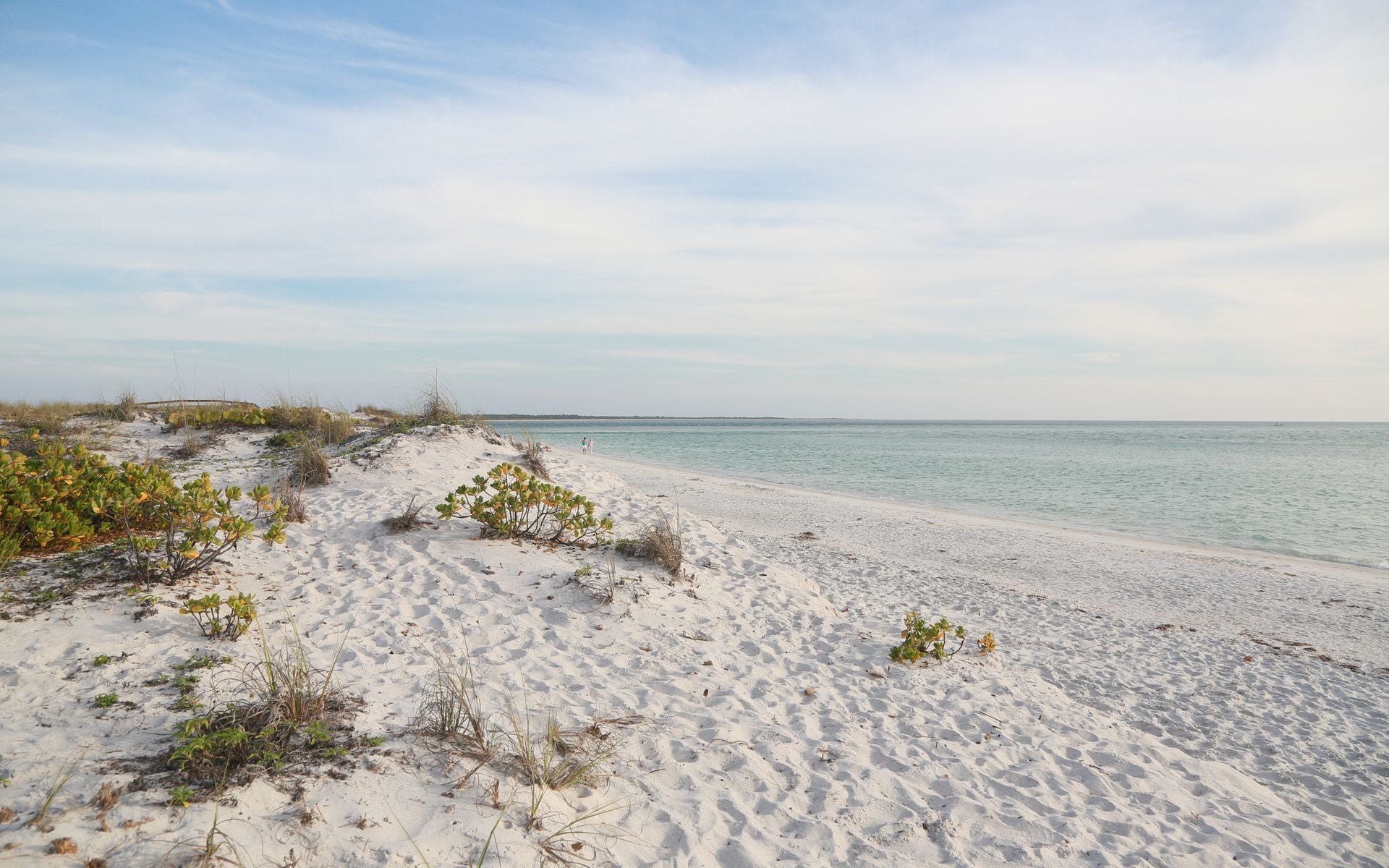
Why the shelling is so good
Most barrier islands in Florida run north to south. Sanibel and Captiva sit sideways, east to west, so the beaches face south into the Gulf and scoop up shells that drift up from the tropics. Low tide, the hours after a winter cold front, and the mornings after a storm are the best times to look, and you will see people doing the bent-over shuffle locals call the Sanibel Stoop. Live shelling is restricted, so take empty shells only. The islands are part of the Southwest Florida region and land on our best beaches list for shells rather than swimming.
Bowman's Beach on Sanibel is the top shelling spot and the most natural, with a walk from the parking lot that keeps crowds down. Lighthouse Beach at the east end pairs sand with the 1884 Sanibel Lighthouse. See the beaches guide for how these compare to the swimming beaches further north.
Ding Darling and the wild side
The J.N. Ding Darling National Wildlife Refuge covers more than half of Sanibel and protects mangrove estuary that draws roseate spoonbills, herons, ospreys, and alligators. A four-mile Wildlife Drive lets you go by car, bike, or kayak, and early morning at low tide is best for birds. It is one of the top wildlife-watching stops on the Gulf coast and a big part of why the islands feel undeveloped.
Important for planning: the islands were hit hard by Hurricane Ian in September 2022, and the causeway, beaches, and businesses have been rebuilding since. Access has largely reopened, but check current openings for specific hotels, restaurants, and the refuge before you go, because recovery has been uneven.
Getting on the water and where the boats run
The islands connect to the mainland by the Sanibel Causeway from Fort Myers. Just north, Fort Myers Beach on Estero Island is the nearest full-service marina base. Salty Sam's Marina in Fort Myers Beach runs inshore and shallow-water trips for redfish, snook, and tarpon in the flats and backwaters, and it is a practical launch point for the sound between the islands. Pink Shell Beach Resort & Marina, also on Estero Island, offers a beachfront base with a marina and direct beach access if you want to combine the islands with a Fort Myers Beach stay.
For quieter, paddle-based fishing and eco trips through the mangroves, Pure Florida runs kayak and small-boat trips out of the broader southwest coast around Naples, an option if you want low-impact access rather than a fast offshore run. Shelling and dolphin cruises to Cayo Costa and North Captiva also depart from the island marinas in season.
The pace, and what not to expect
Sanibel has building-height limits and no traffic lights on the main road, so this is a bikes-and-beach-cruisers kind of place, not a resort strip. Captiva, at the north end past the narrow Blind Pass, is even smaller and more exclusive, ending at the village near South Seas. If you want nightlife and high-rises, this is not it; if you want early beach walks, a good book, and shells, it is one of the best on the coast.
The islands pair well with a southwest road trip. It is about 50 minutes south to Naples and its upscale beaches, and about 70 minutes to Marco Island and the Ten Thousand Islands at the edge of the Everglades.
When to go and getting there
The dry season from November through April is the best time on Sanibel and Captiva: warm, sunny days, low humidity, and the winter cold fronts that stir up the best shelling after they pass. It is also peak season, so book rentals and the smaller island hotels well ahead. Summer, from May through October, is hot and humid with brief afternoon storms and warmer Gulf water, at lower rates. Hurricane season runs June through November, and given the 2022 damage from Ian, it is worth watching the forecast and considering travel insurance in those months.
You reach the islands by car over the tolled Sanibel Causeway from Fort Myers, about 30 minutes from Southwest Florida International Airport (RSW). Once you are on-island, a bike is the best way to get around, since Sanibel is flat, built for cruisers, and laced with paved paths that connect the beaches, the refuge, and the shops.
Frequently asked questions
Why are Sanibel and Captiva so good for shelling?
The islands run east to west rather than north to south, so their south-facing beaches catch shells that drift up from the Gulf. Low tide, the hours after a winter cold front, and mornings after a storm produce the most shells. Take empty shells only; live shelling is prohibited.
Did Hurricane Ian close the islands?
Hurricane Ian hit Sanibel and Captiva hard in September 2022, and the islands have been rebuilding since. The causeway and beaches have largely reopened, but recovery has been uneven, so check current openings for specific hotels, restaurants, and the Ding Darling refuge before your trip.
How do you get to Sanibel Island?
By car over the Sanibel Causeway from Fort Myers, about 30 minutes from Southwest Florida International Airport (RSW). Captiva is reached by continuing north across Blind Pass. There is a causeway toll to enter Sanibel.
Is Sanibel good for swimming or mostly shelling?
It is better known for shelling and wildlife than for swimming. The Gulf here is calm but the beaches are shell-covered rather than soft sand. For classic soft-sand swimming, Siesta Key and Naples are stronger picks.